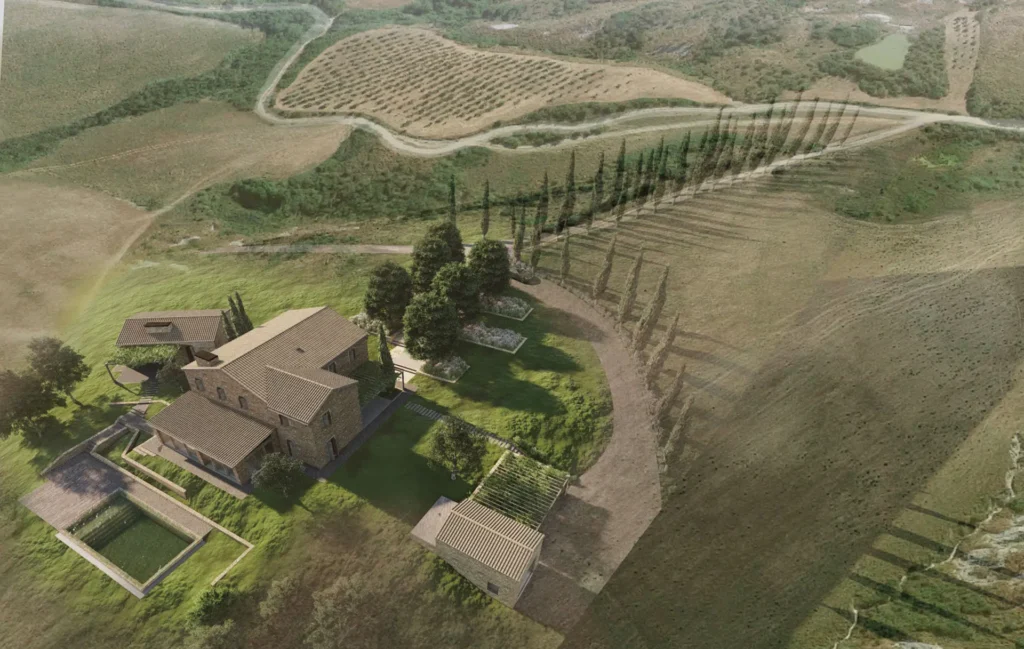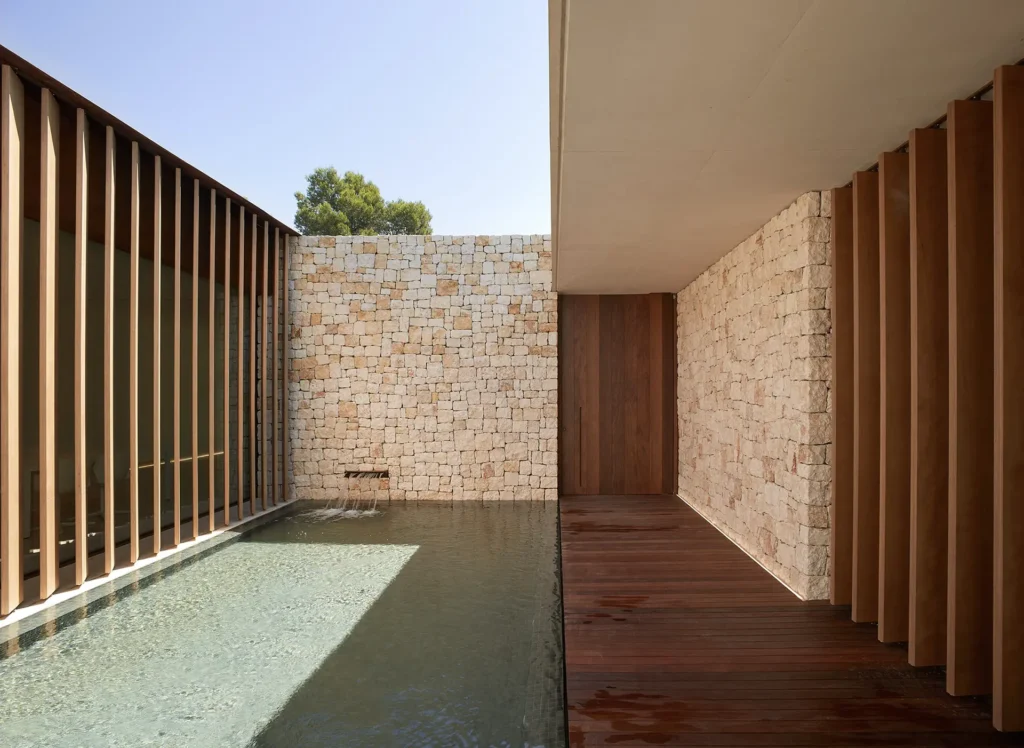
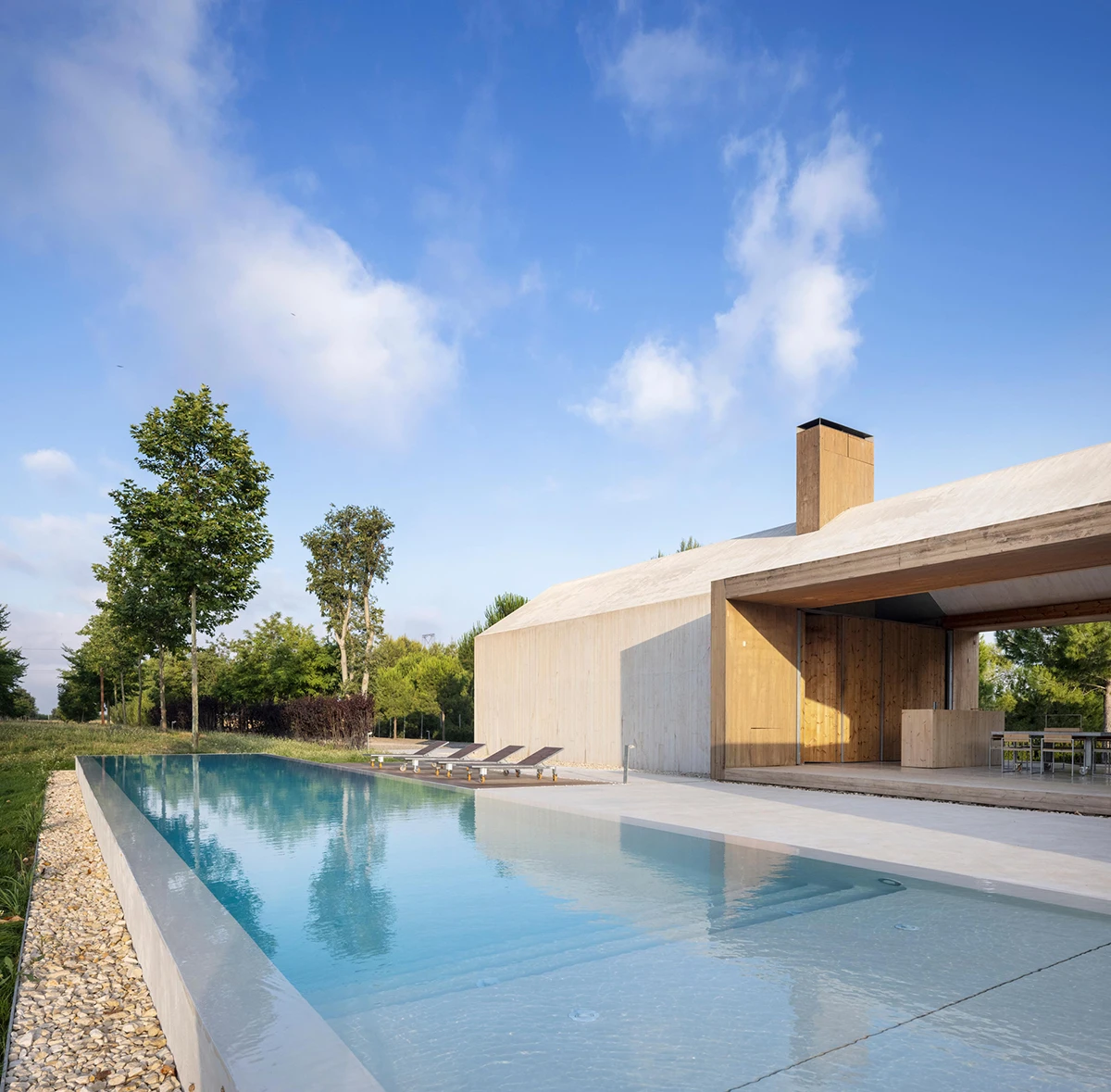
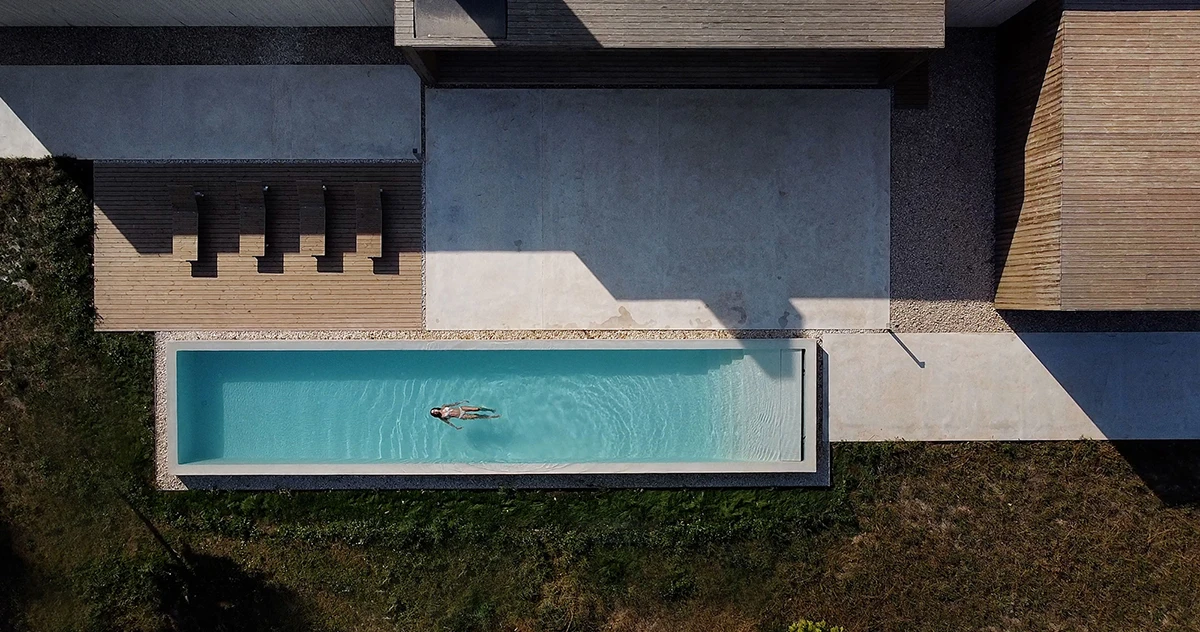
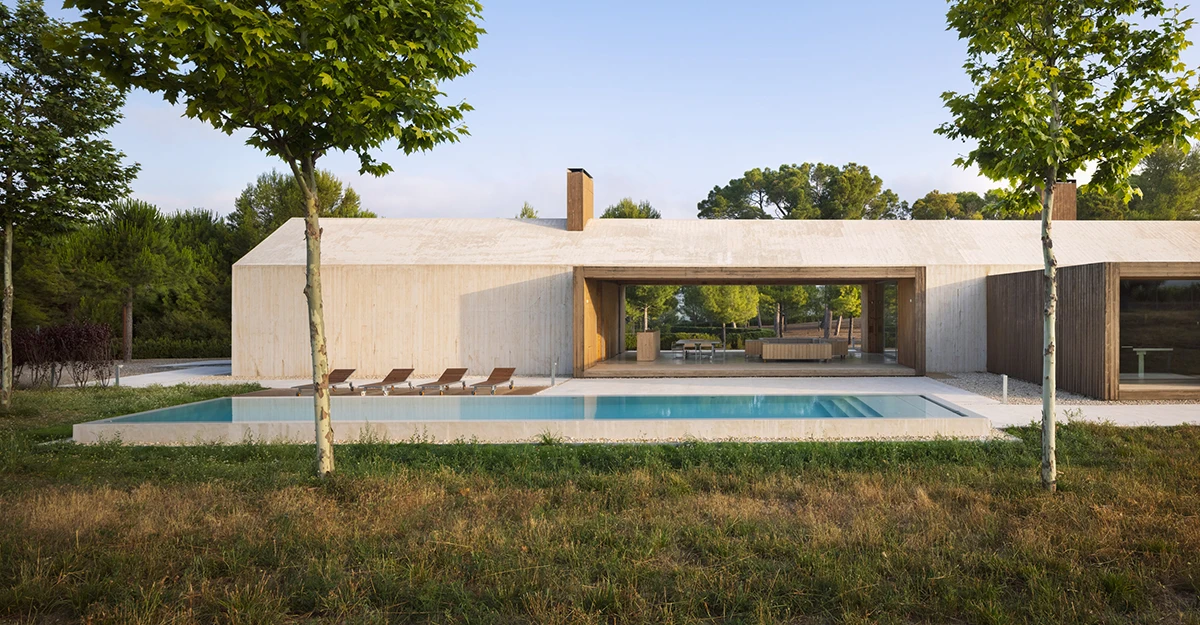
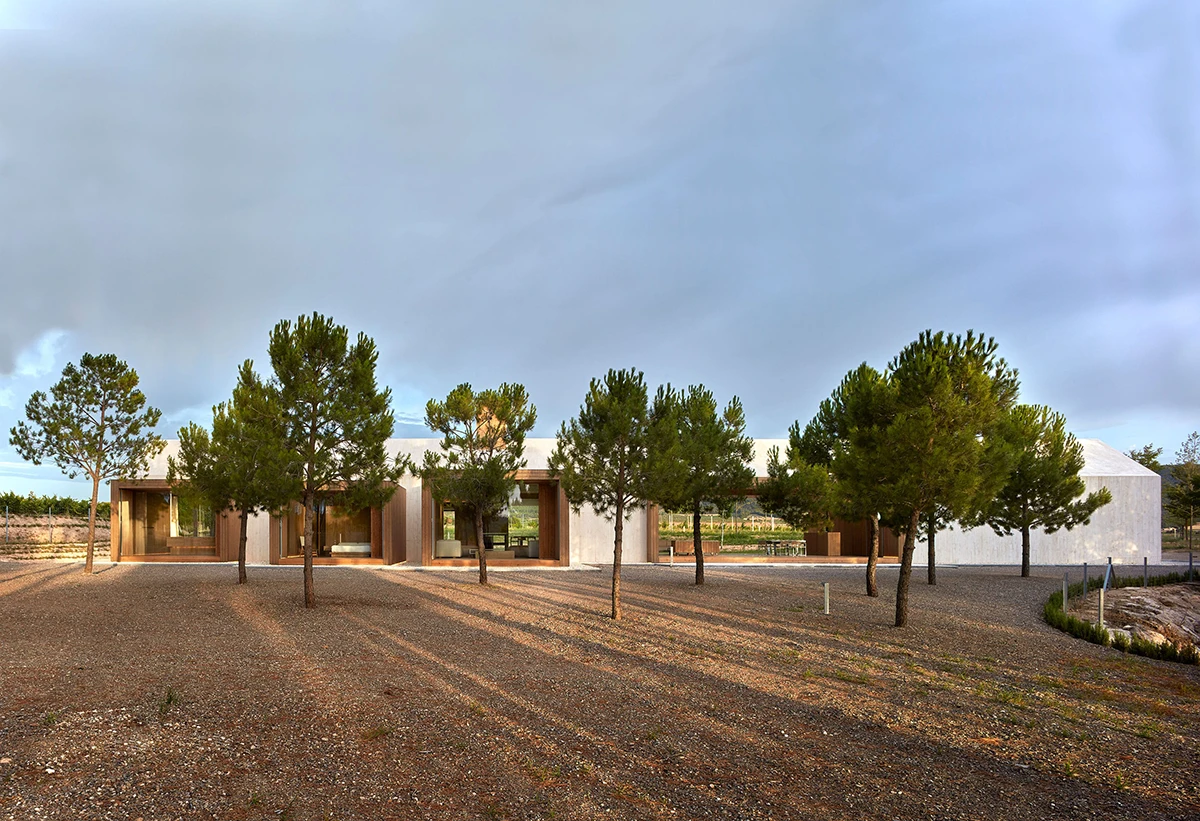
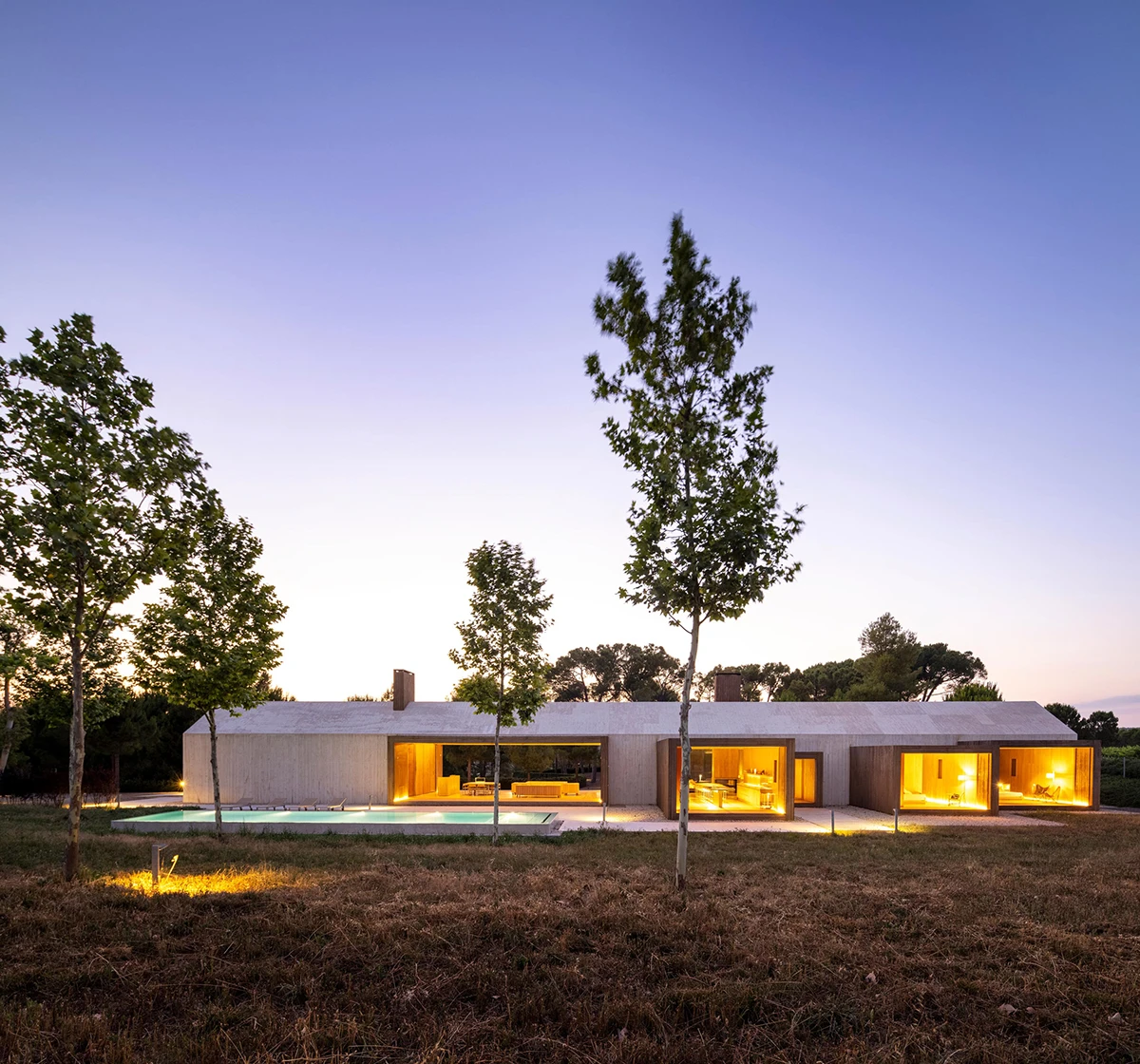
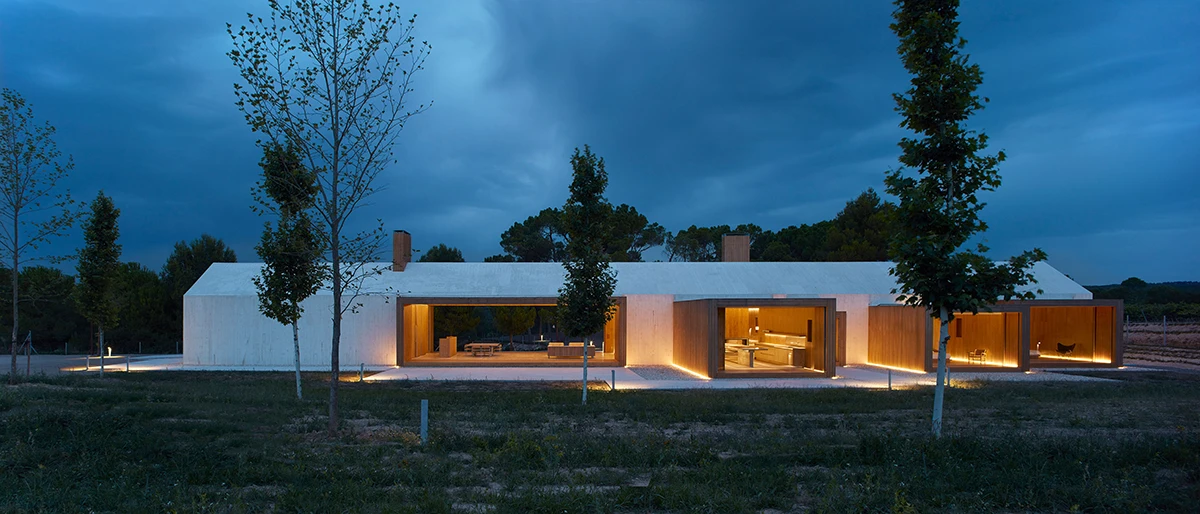
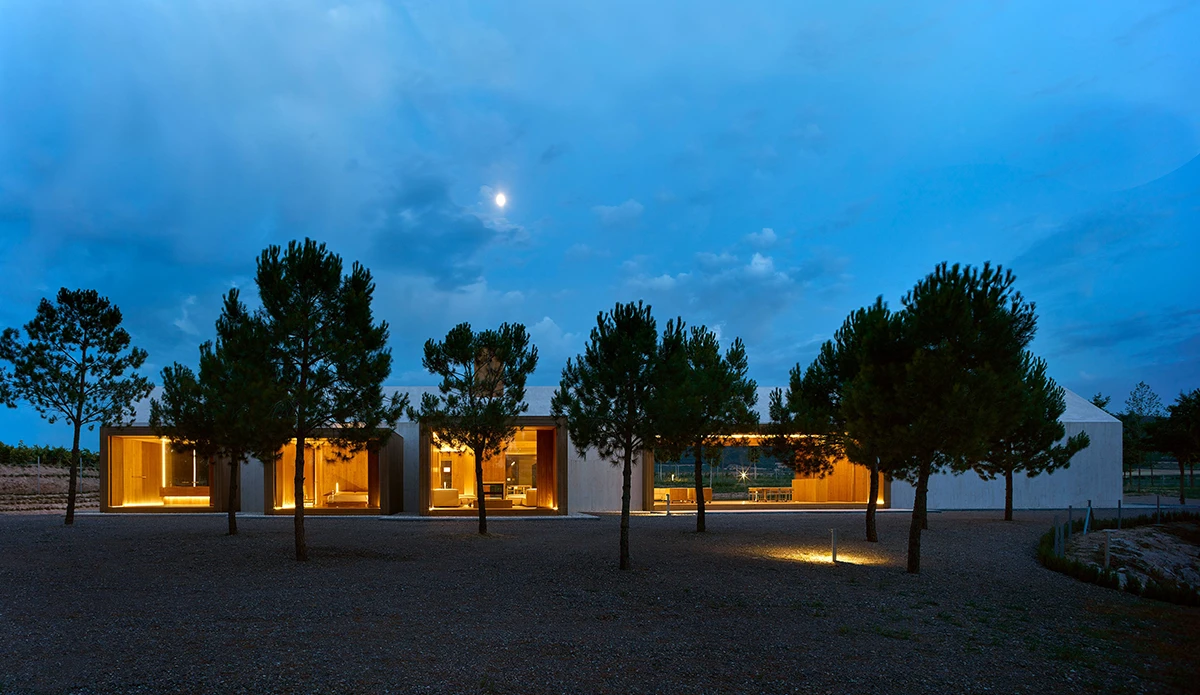
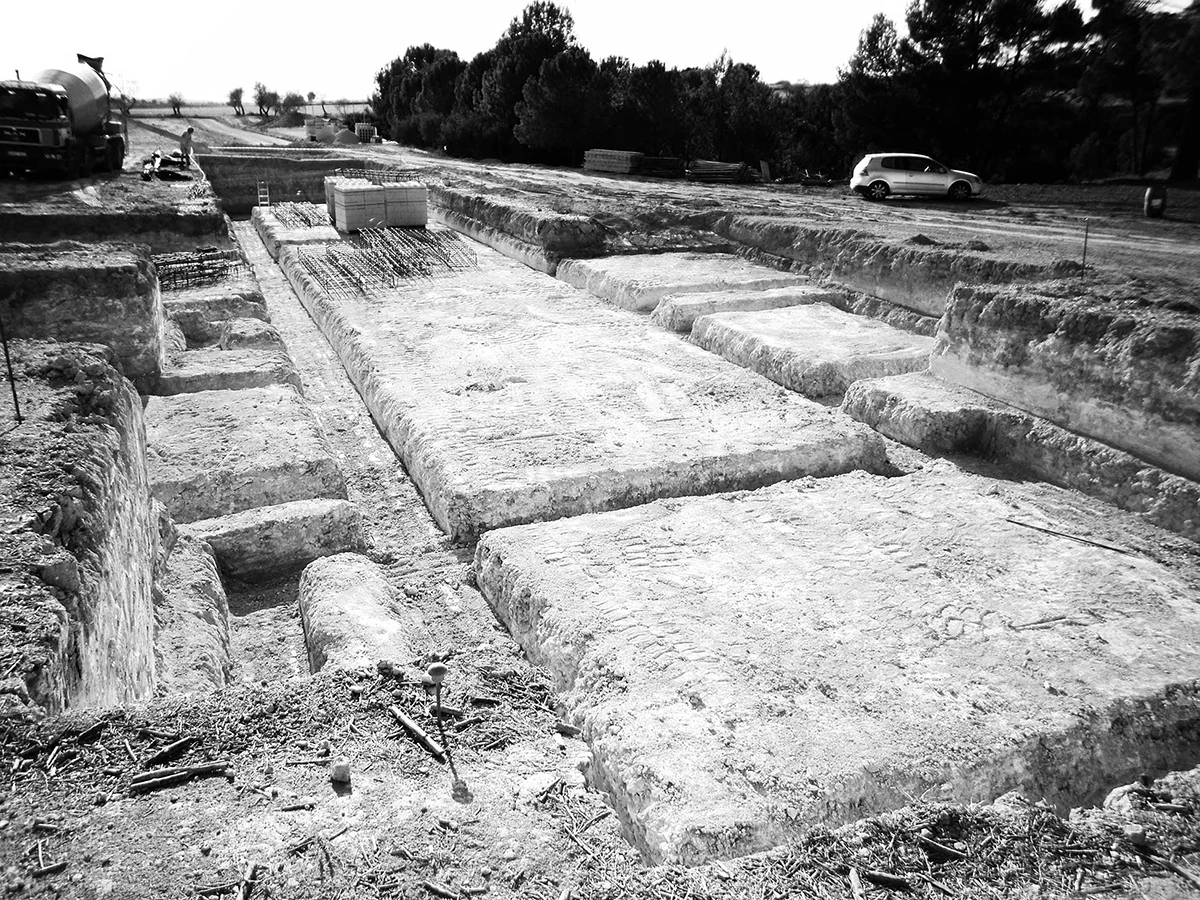
Set on the edge of Fontanars, just beyond the village, the house sits among large agricultural plots at the threshold between pine woodland and vineyards. From the outset, the design prioritizes environmental and visual continuity with this border landscape—so much so that the building reads as an extension of the vegetation rather than an object placed on it. The entire program is resolved on a single level, reducing impact and allowing the volume to settle into the terrain. A restrained palette—white concrete paired with thermally modified pine—reinforces this discreet presence while providing deep shade appropriate to the climate.
"This countryside retreat begins with the archetype of the traditional rural house and its pitched roof, then reinterprets that familiar outline into a new spatial concept." — Ramón Esteve.
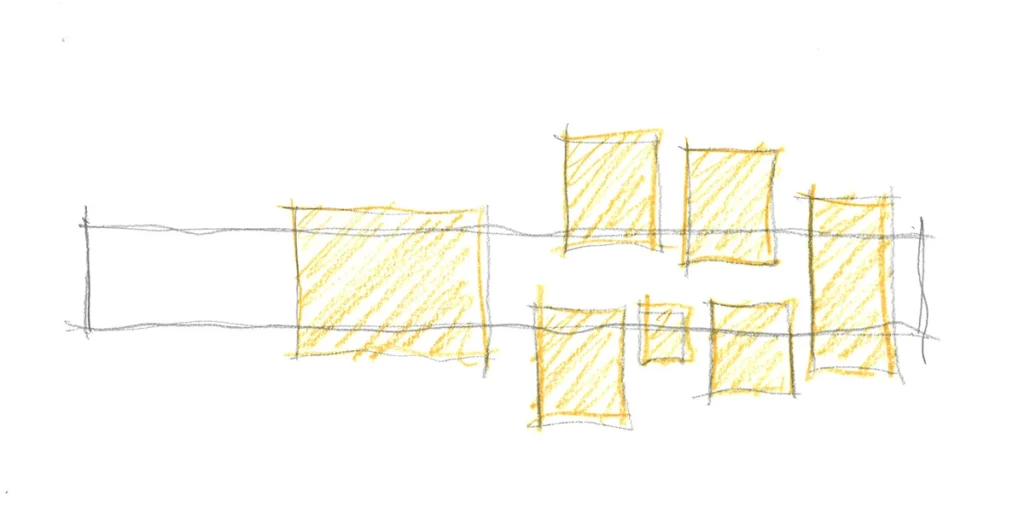
Generating Forms
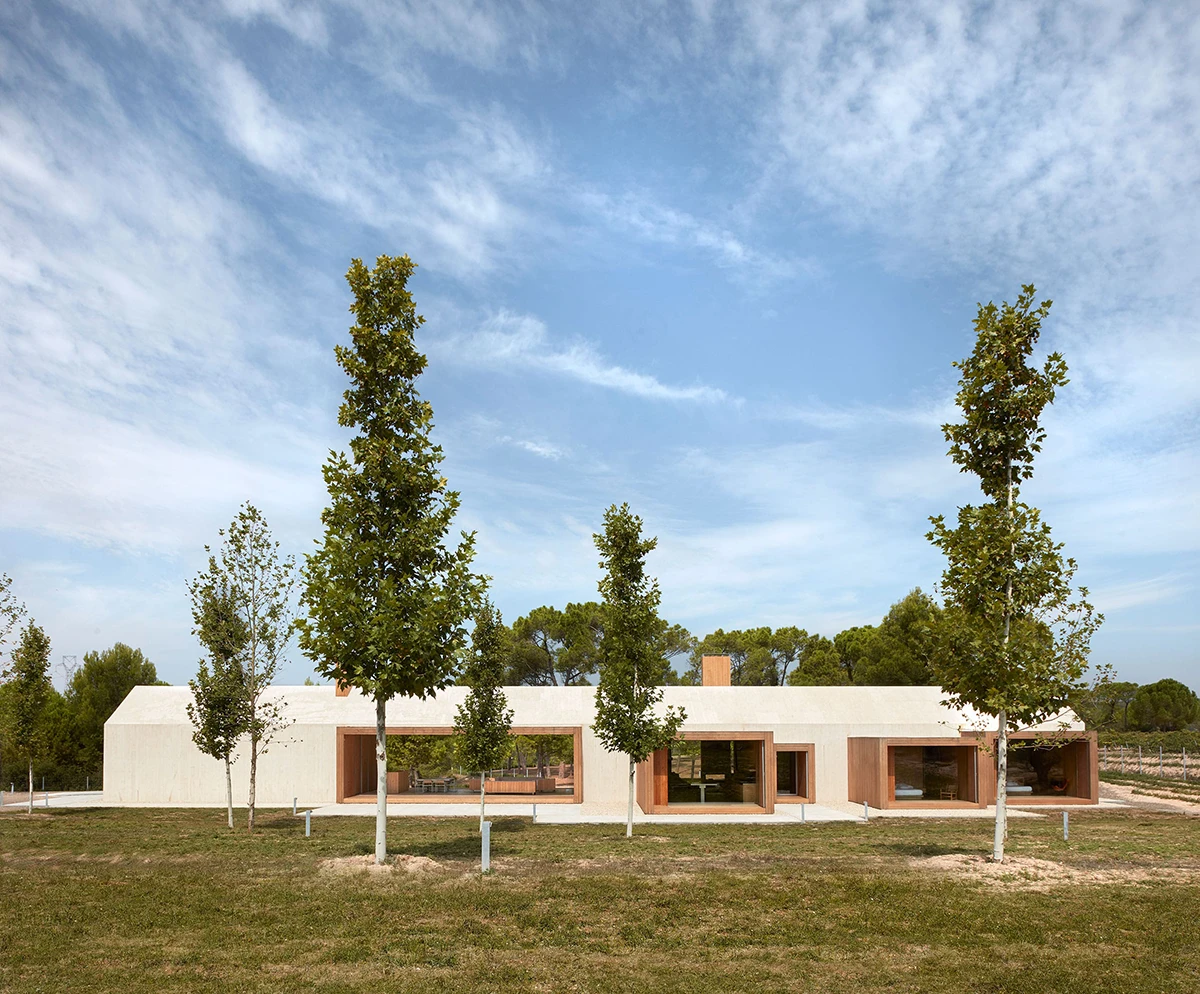
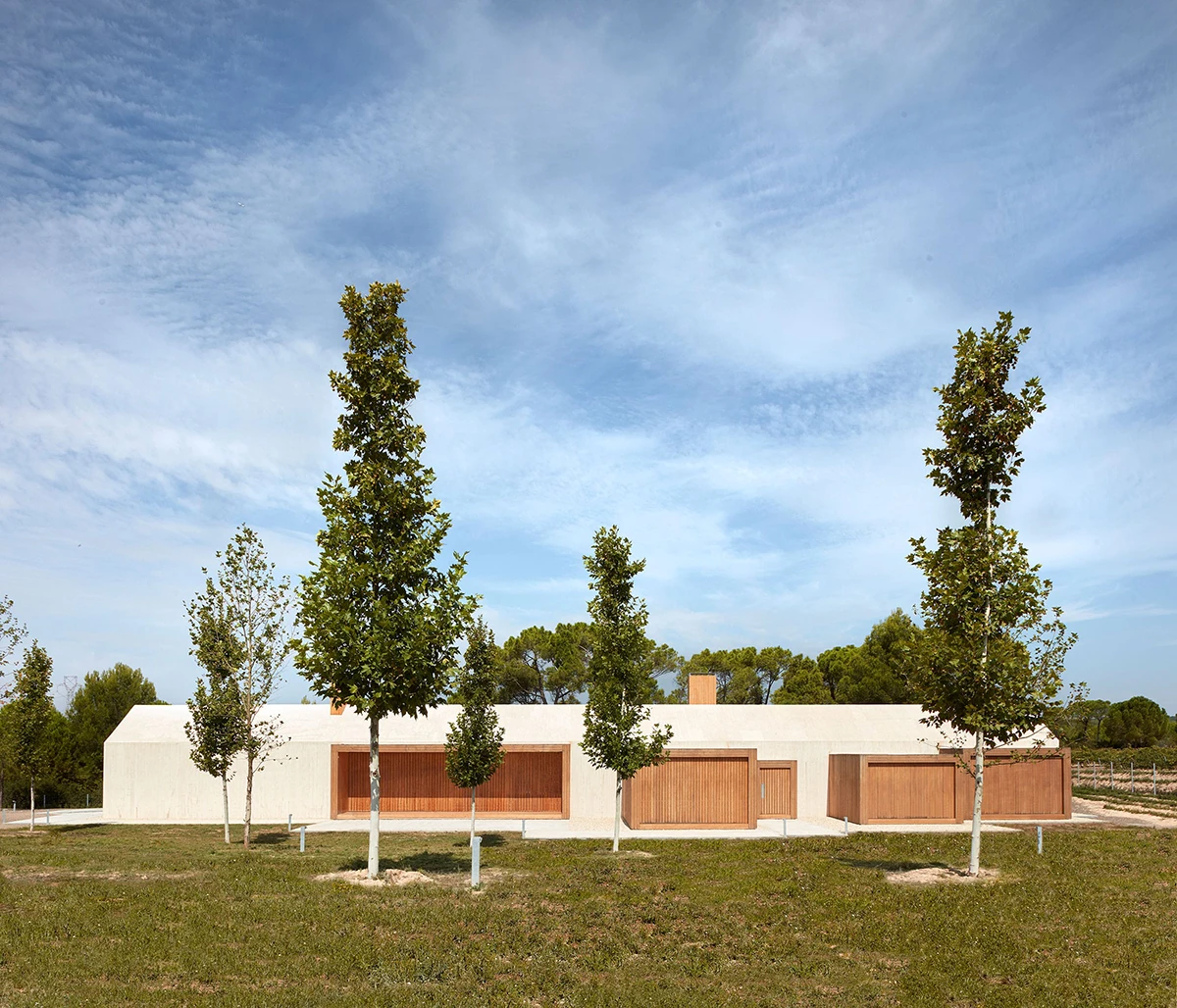
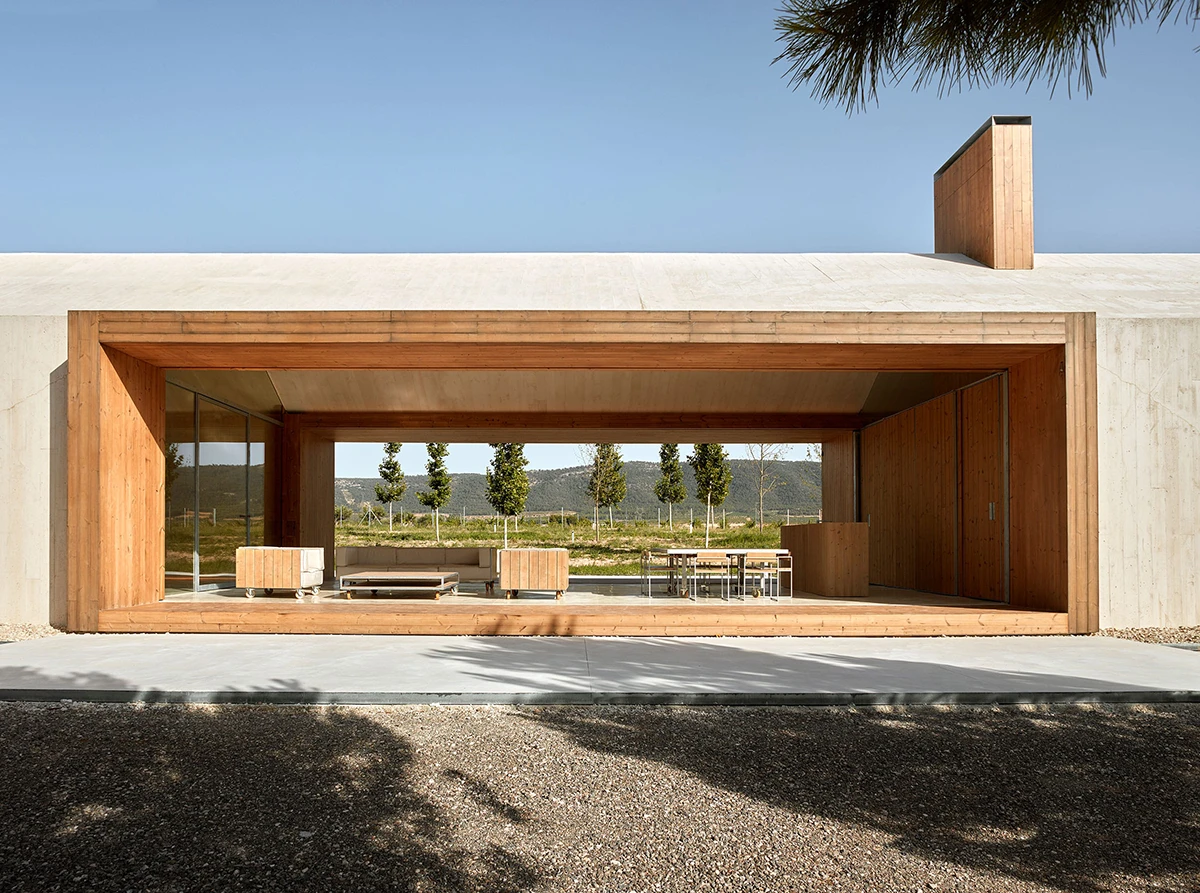
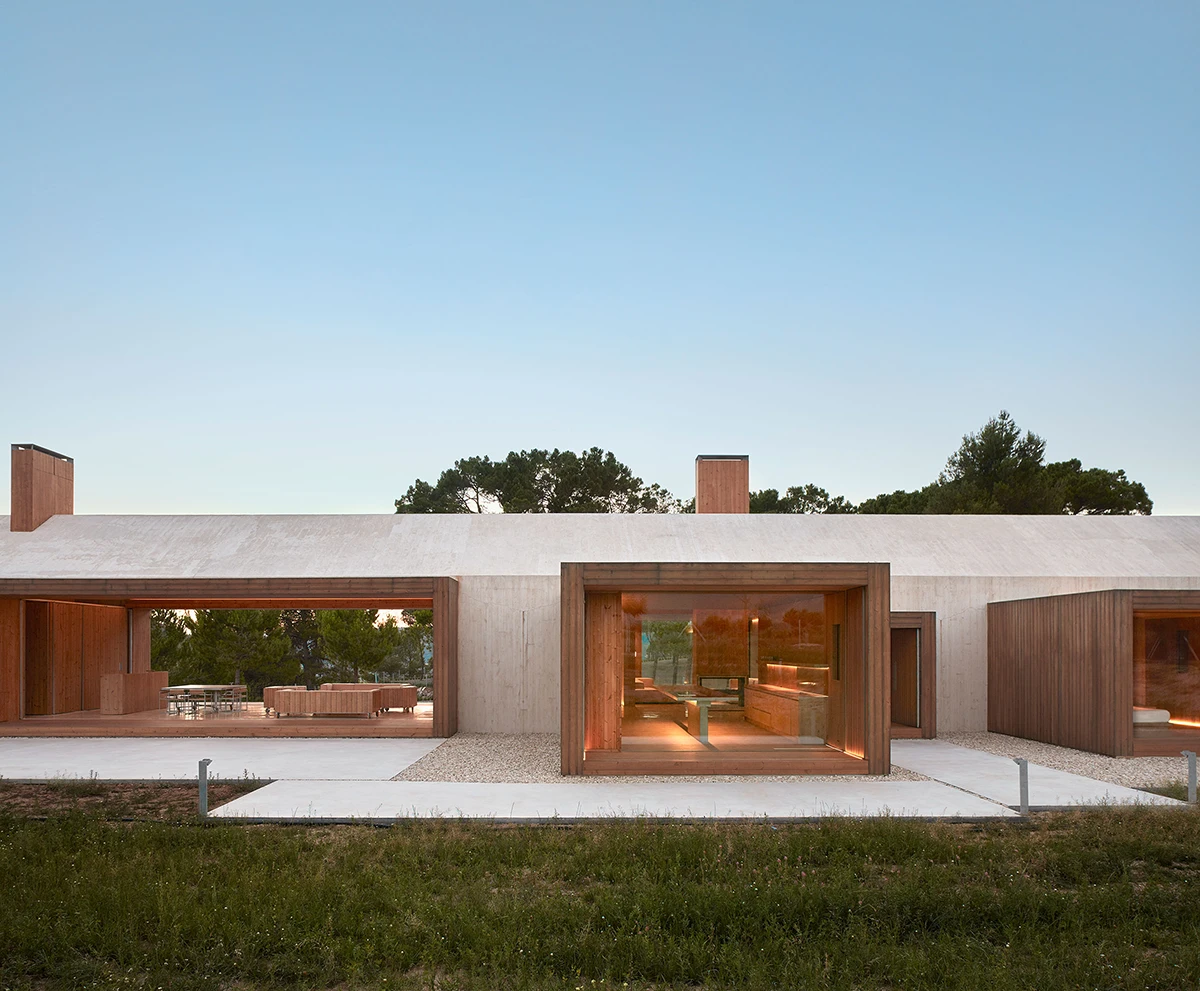
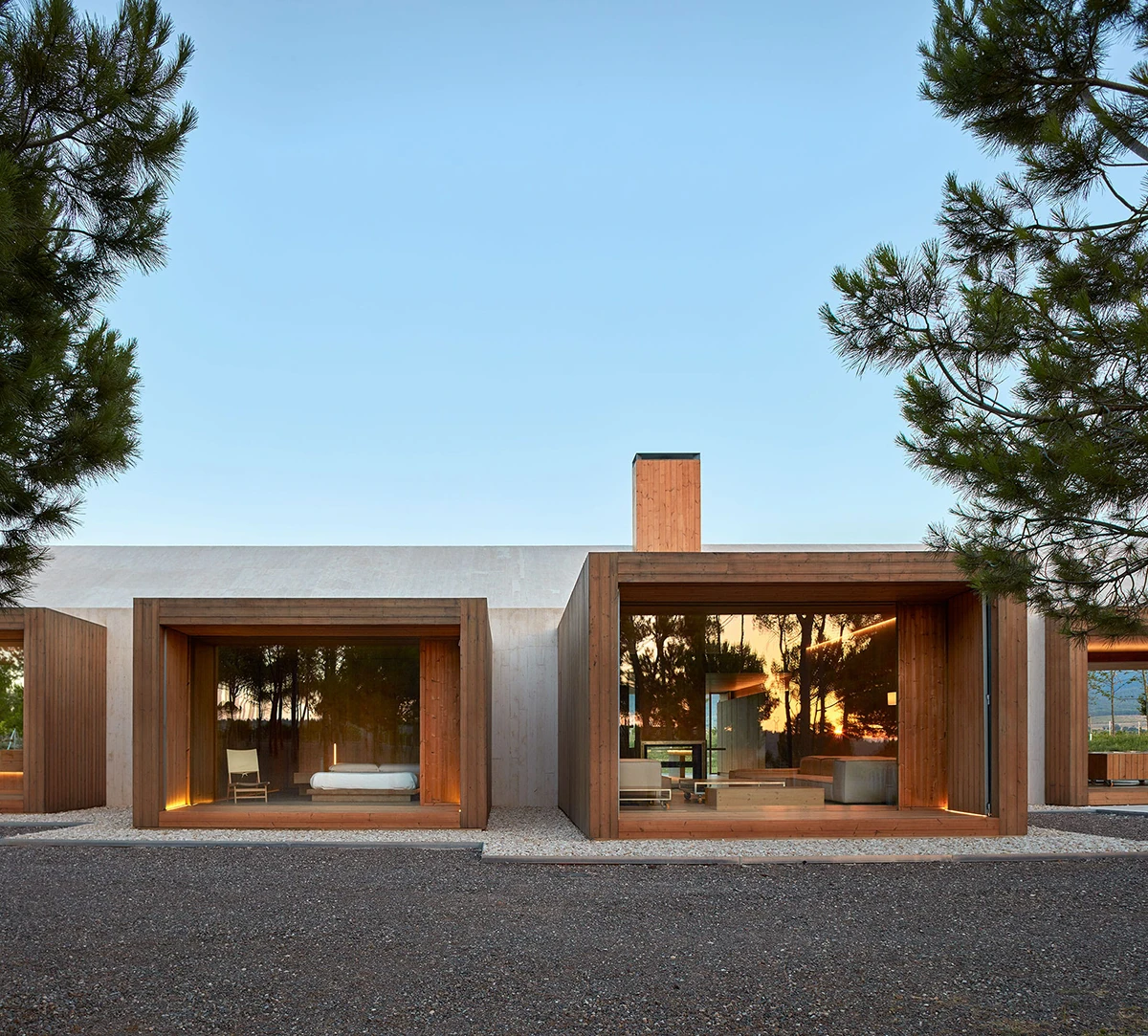
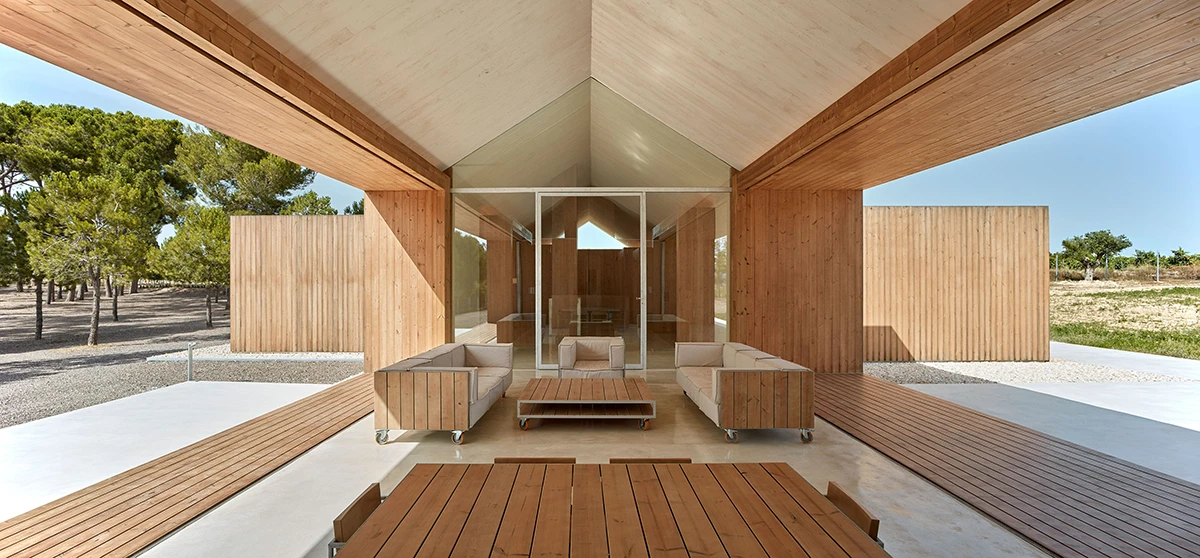
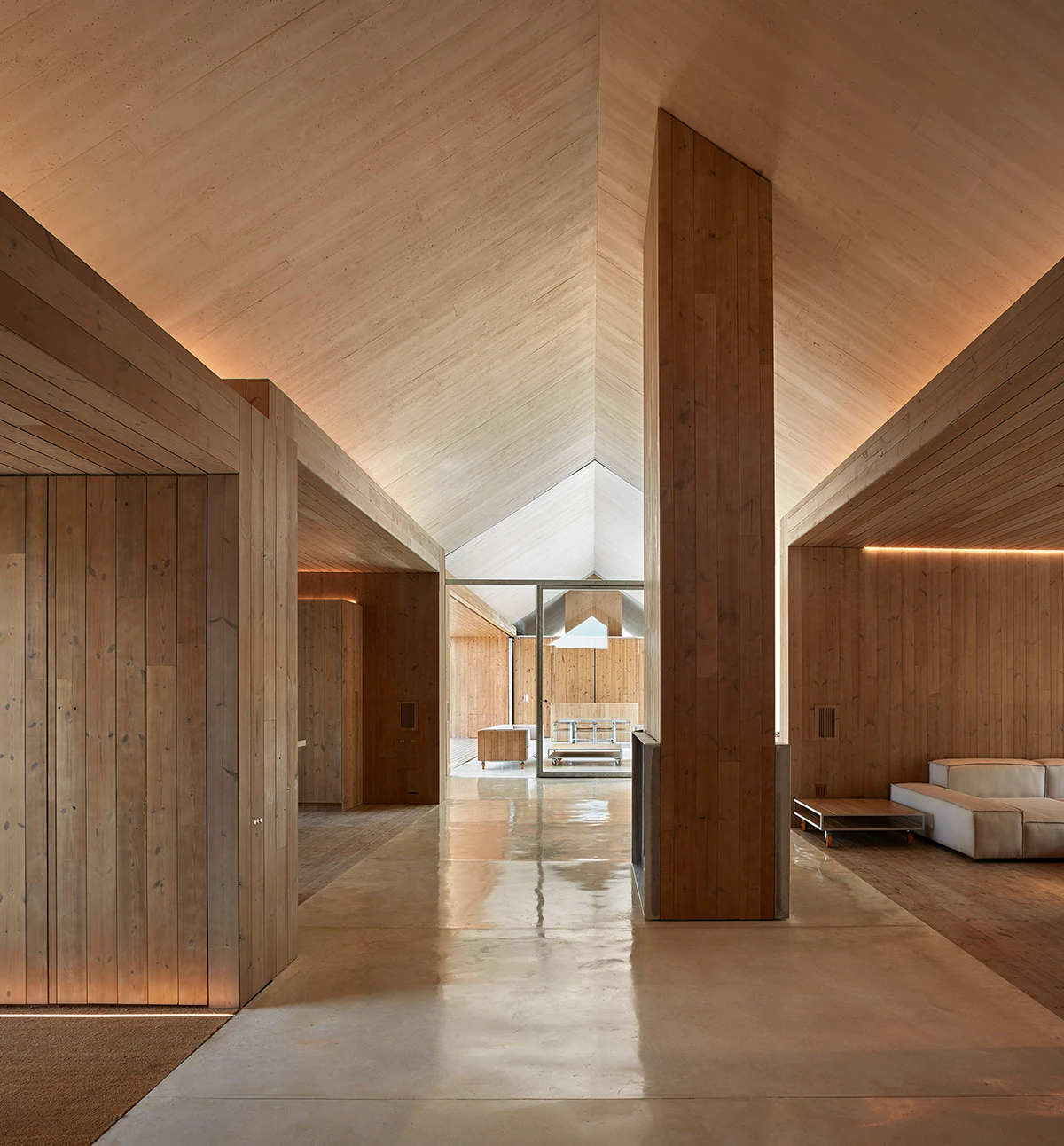
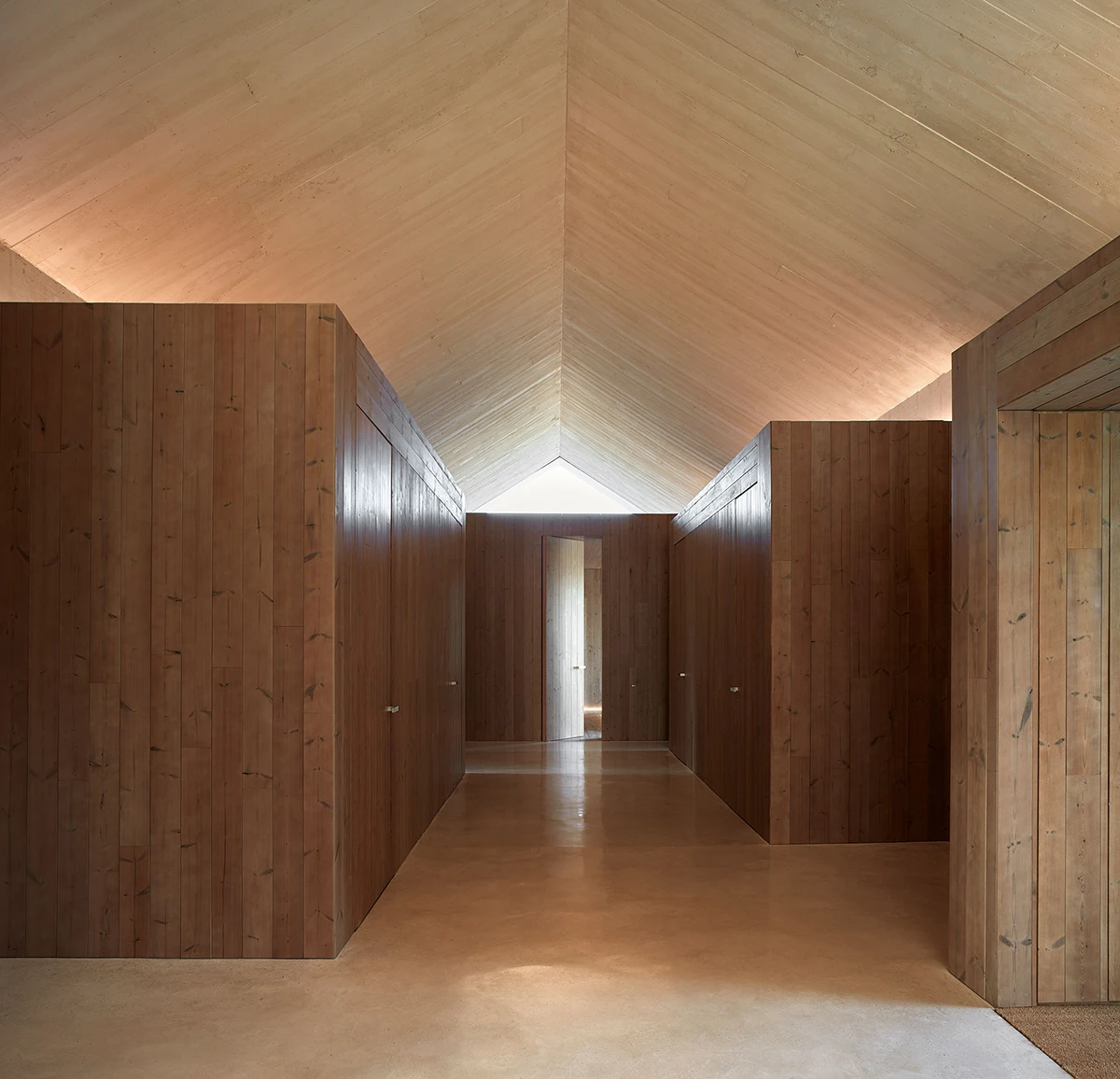
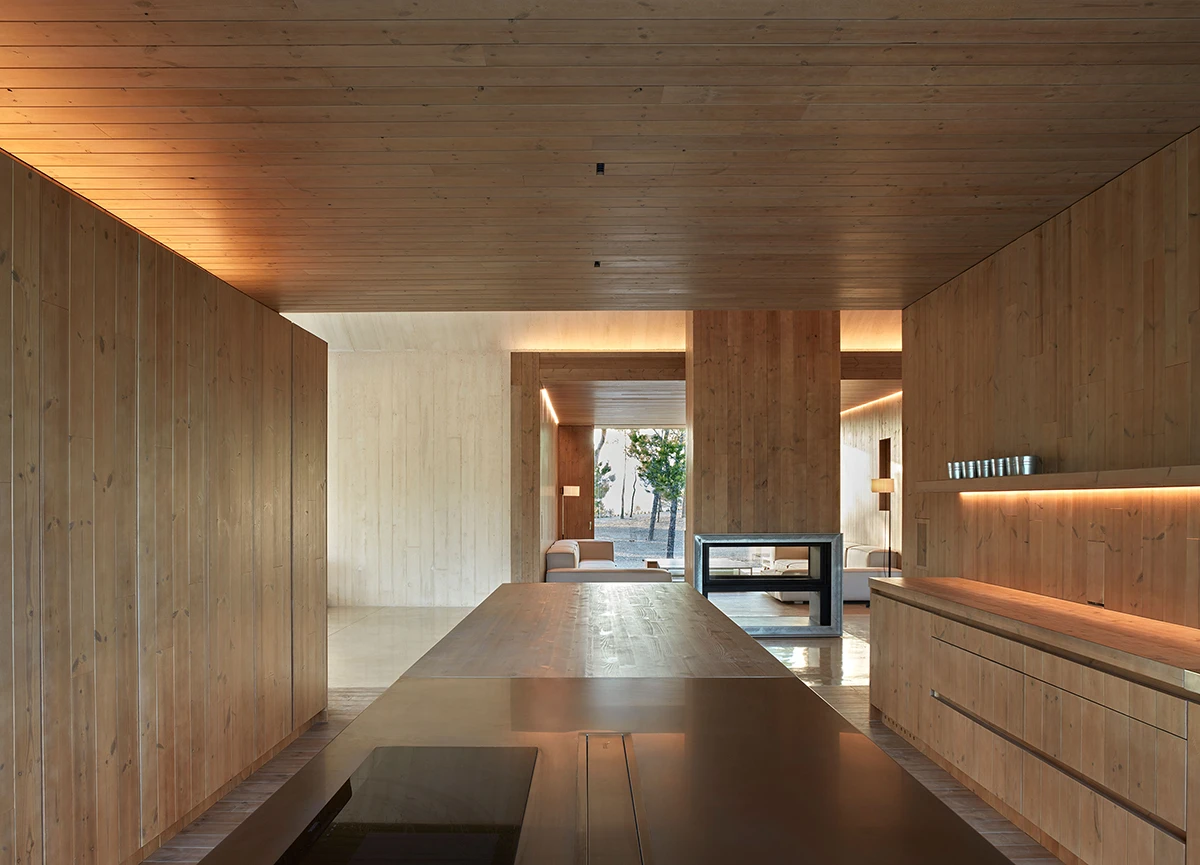
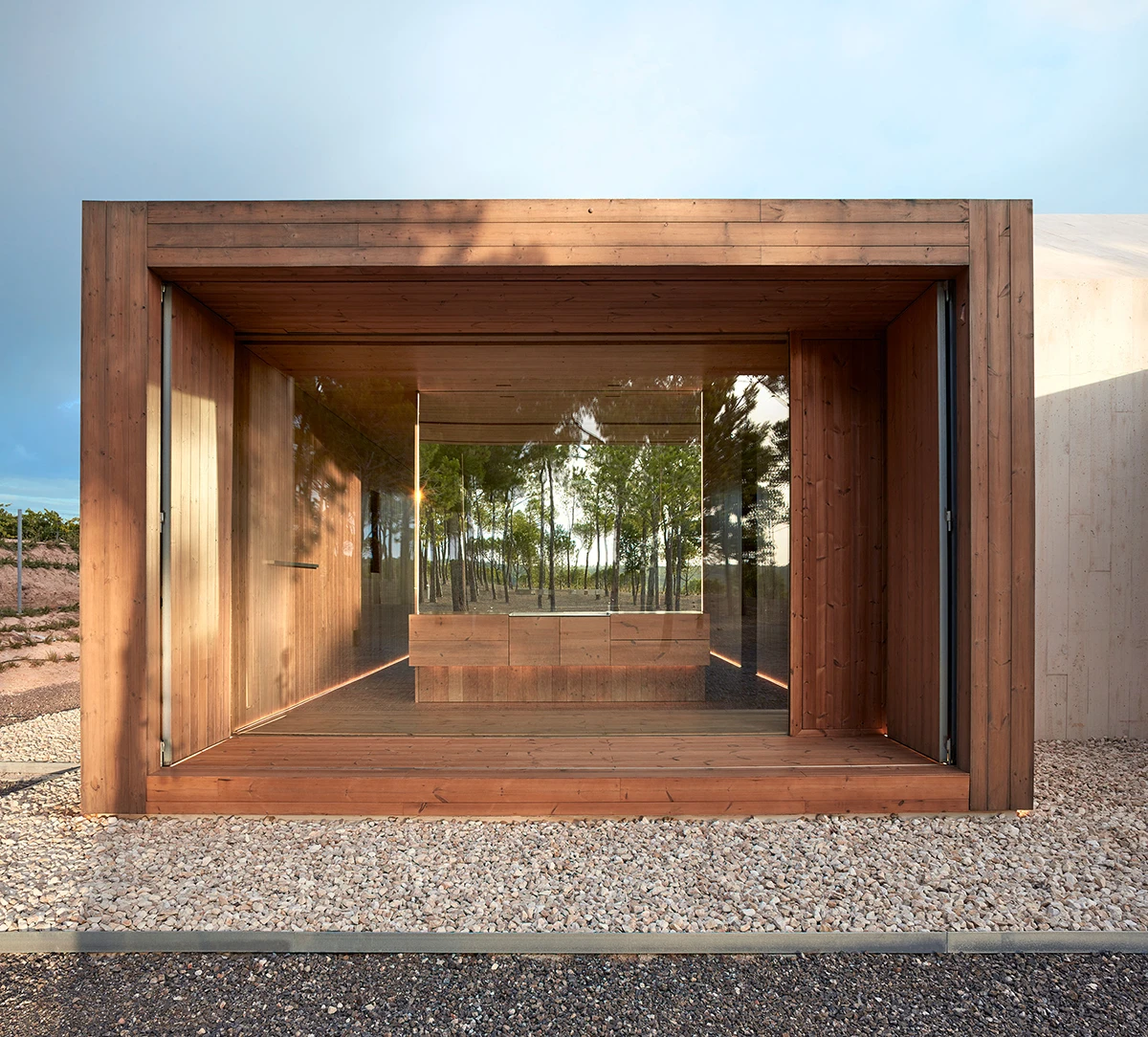
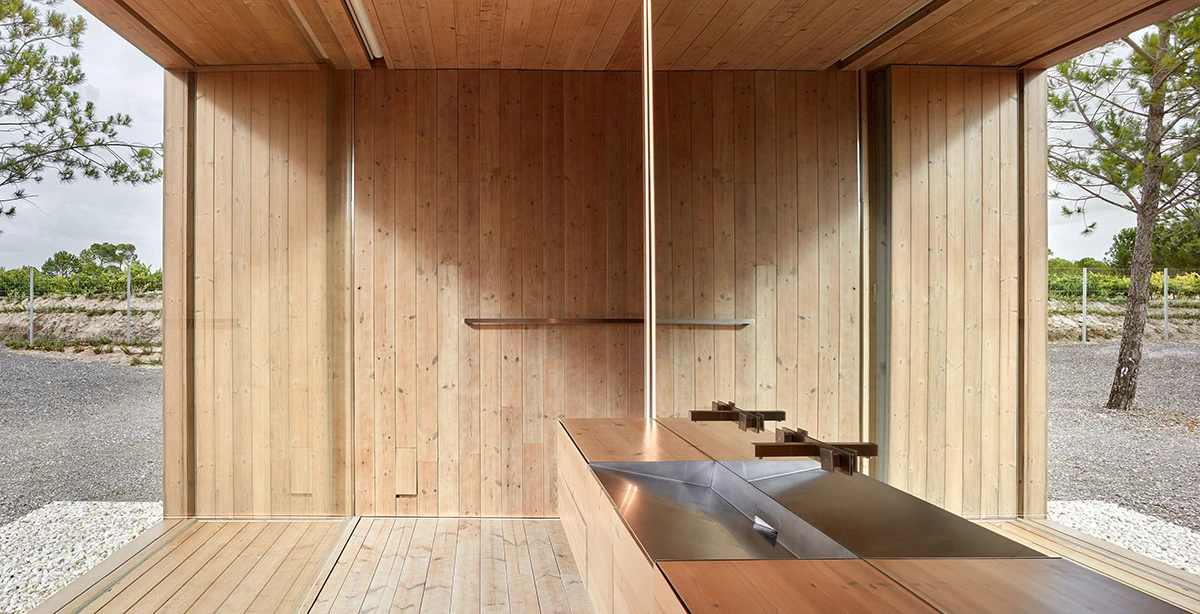
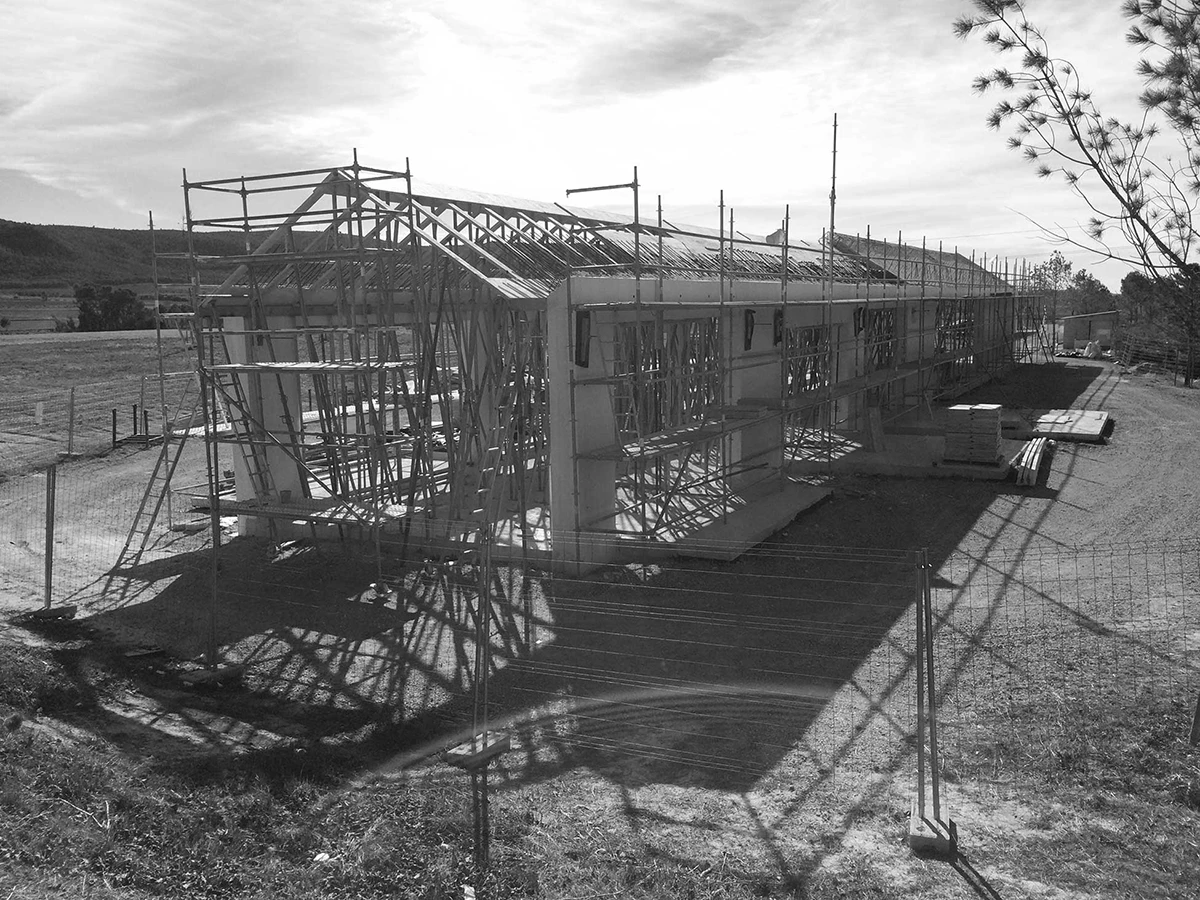
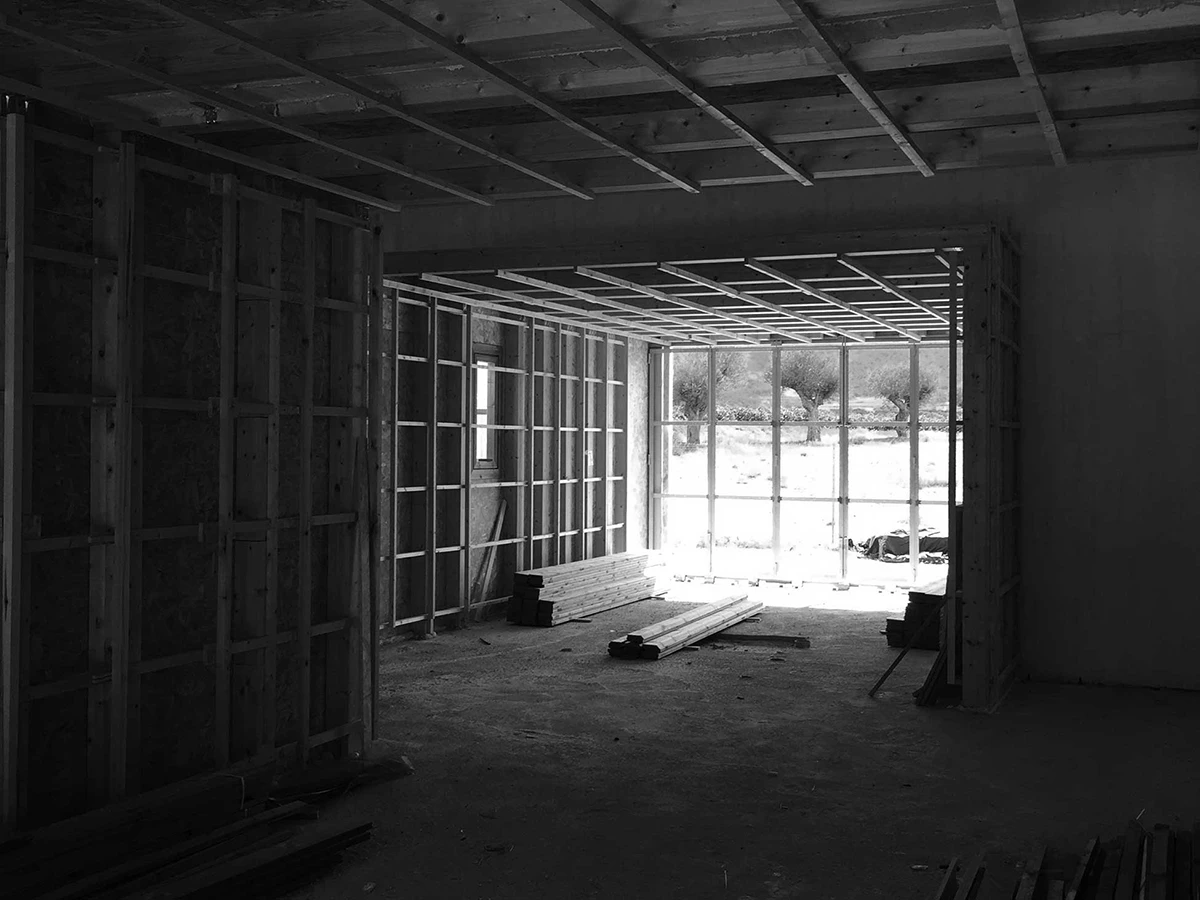
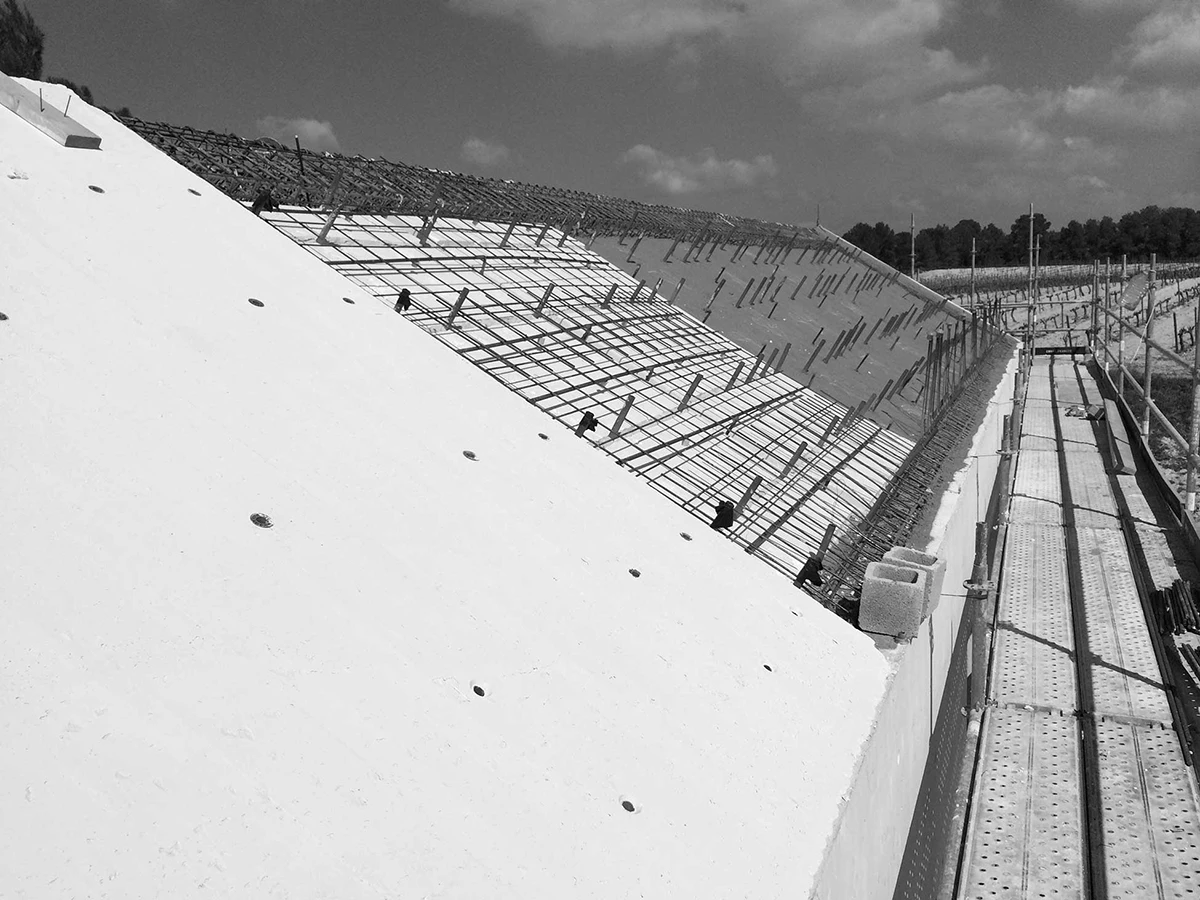
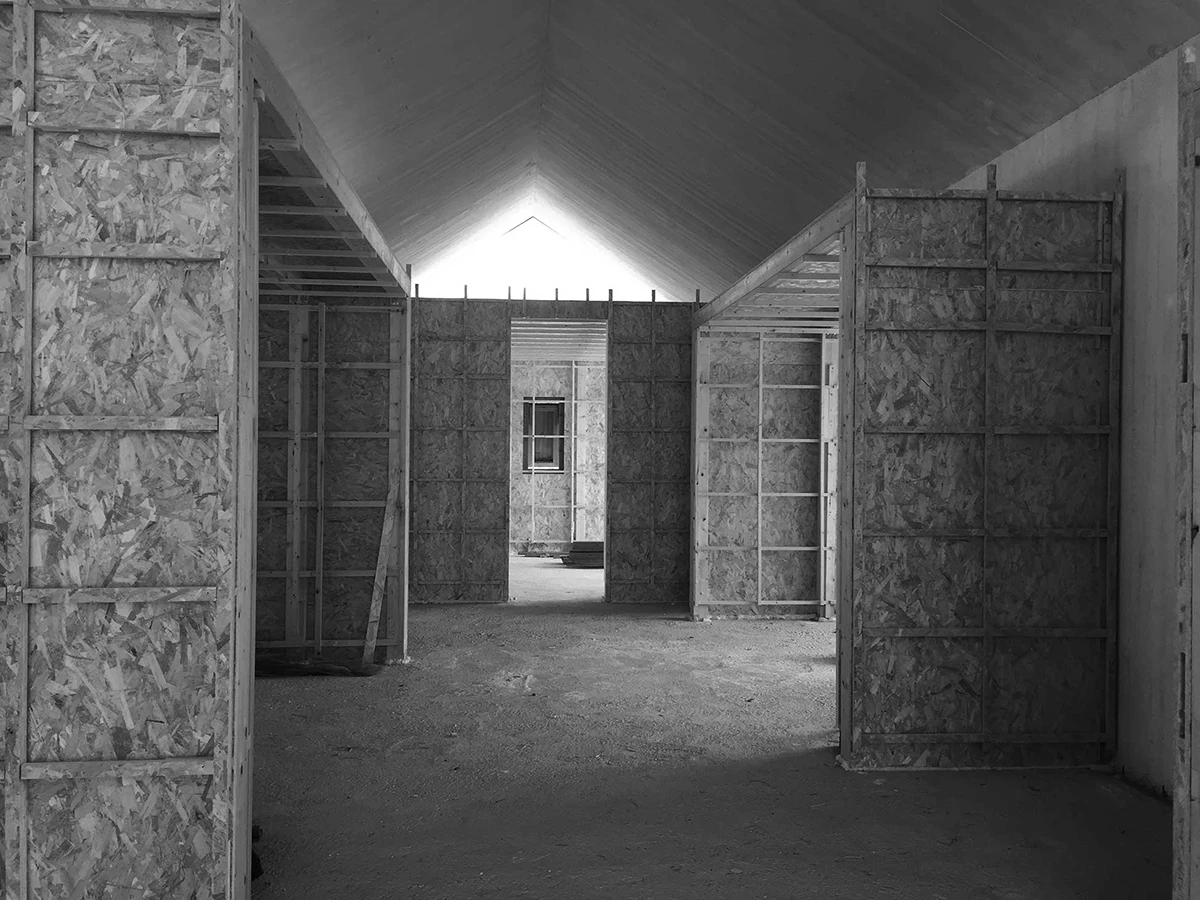
The project's geometry originates from the perimeter line of a conventional pitched-roof dwelling. That defining trace is stretched and extruded to form a continuous envelope—a long, monolithic concrete shell that organizes the home's program beneath it. Perpendicular to this spine, the rooms appear as precise timber "containers" inserted through the concrete body, creating a clear structural and spatial rhythm.
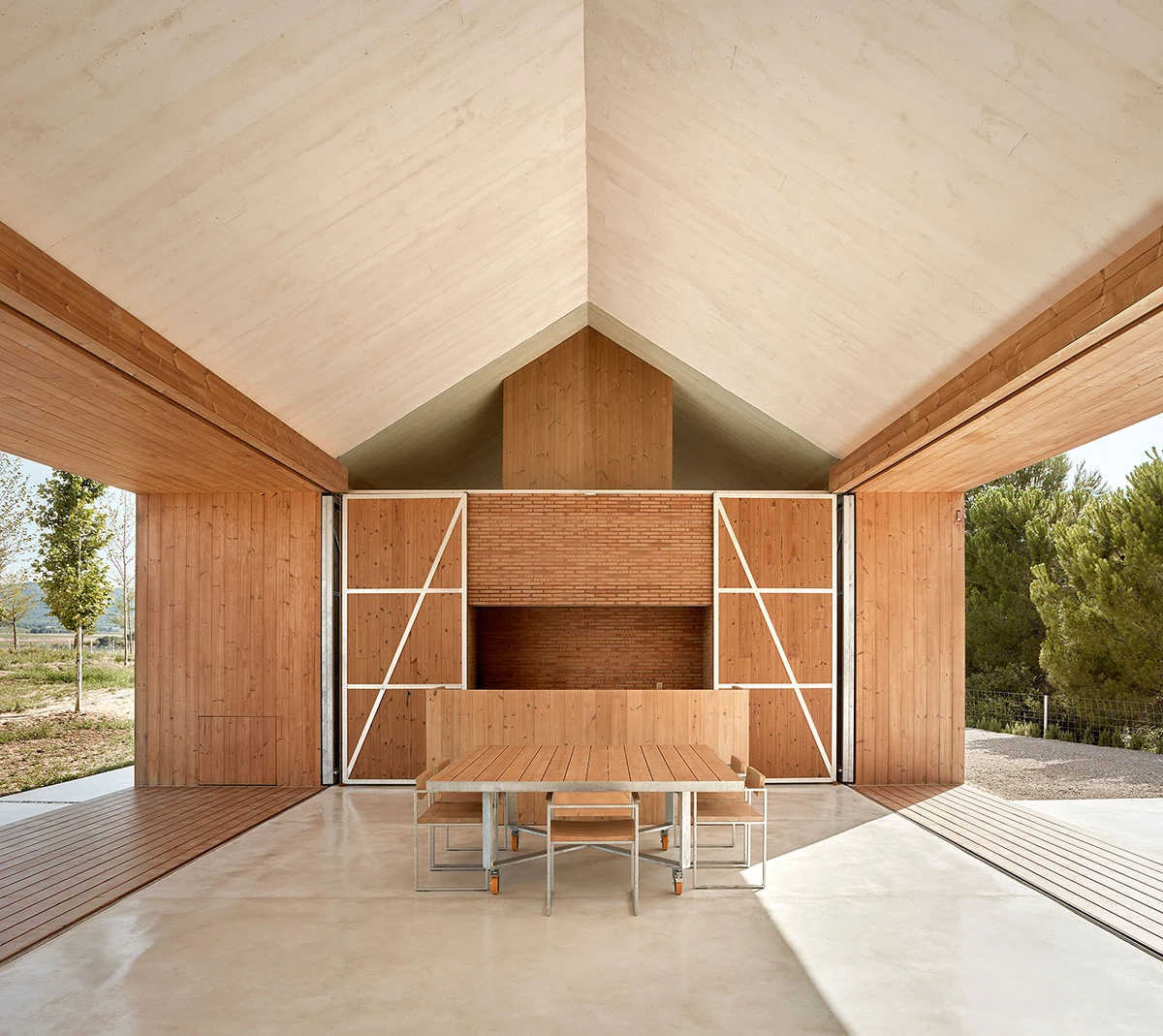
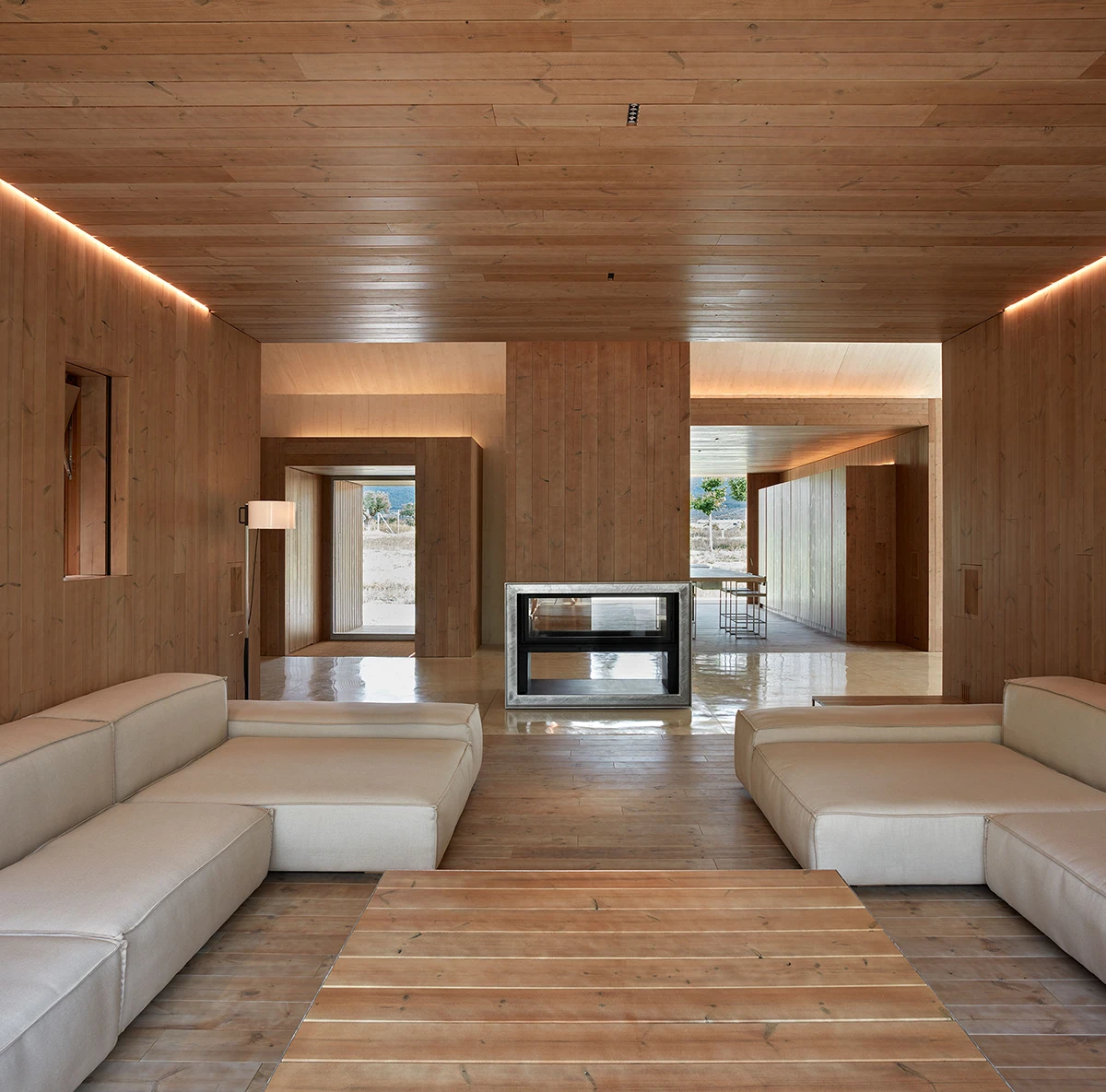
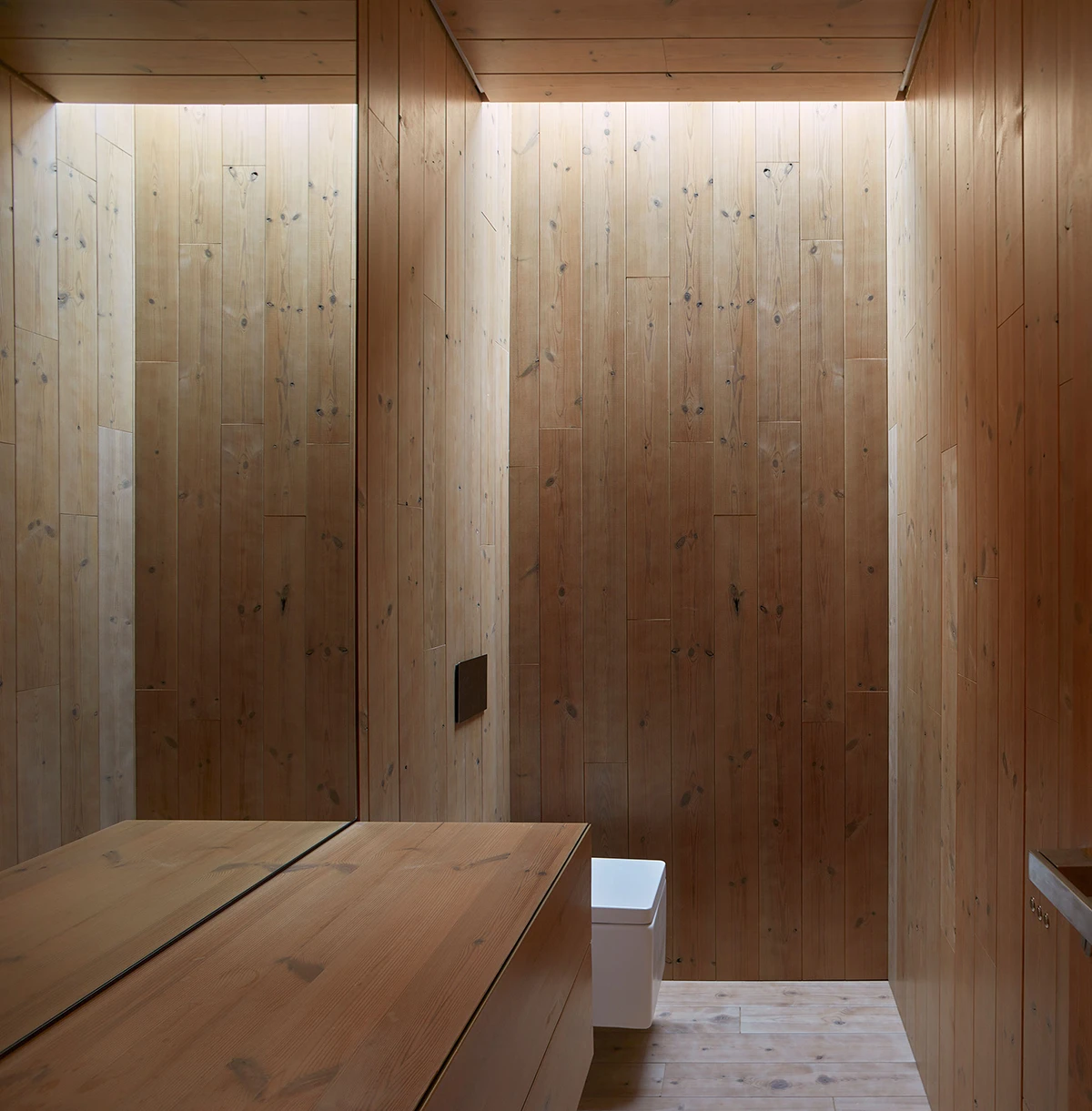
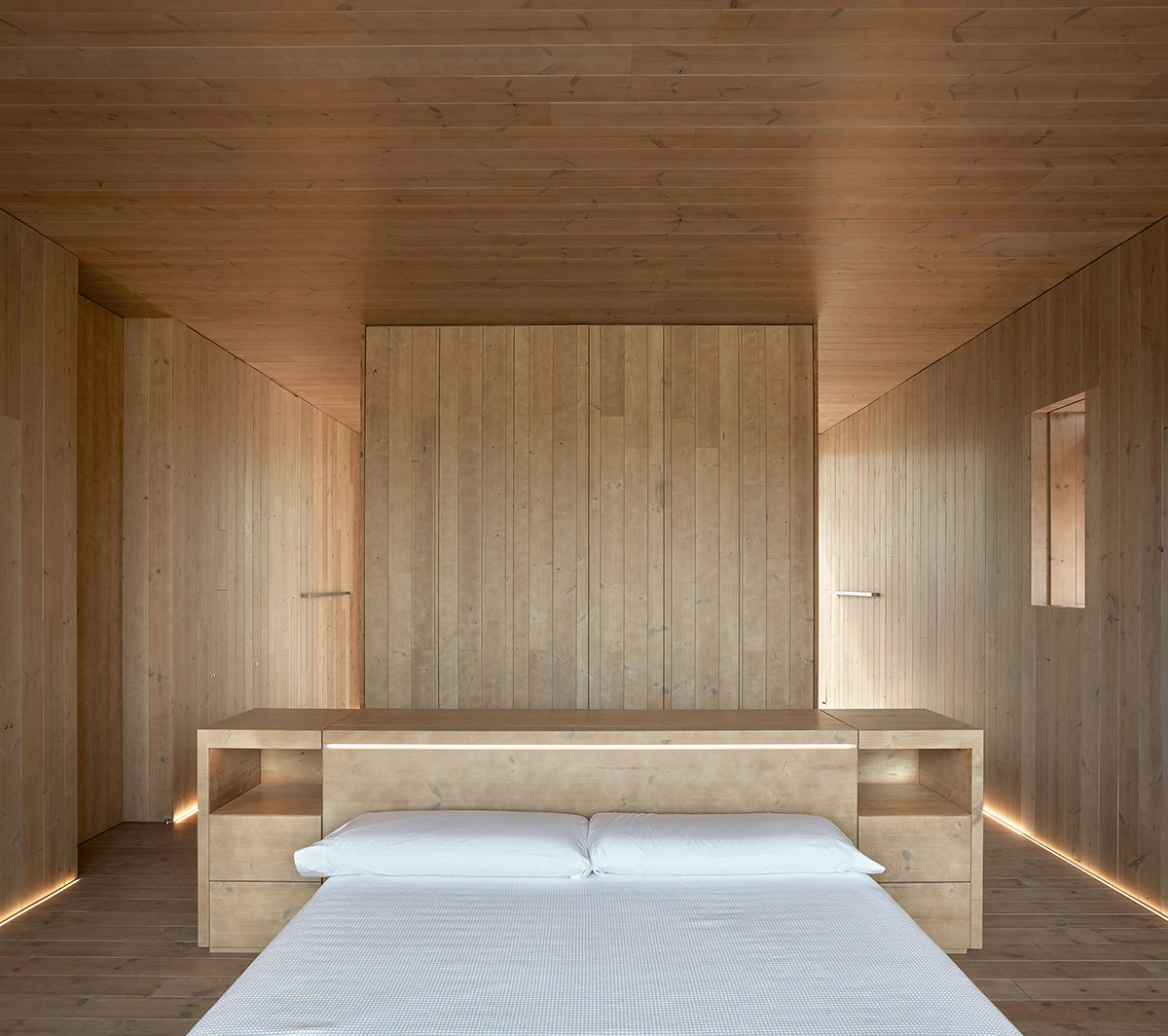
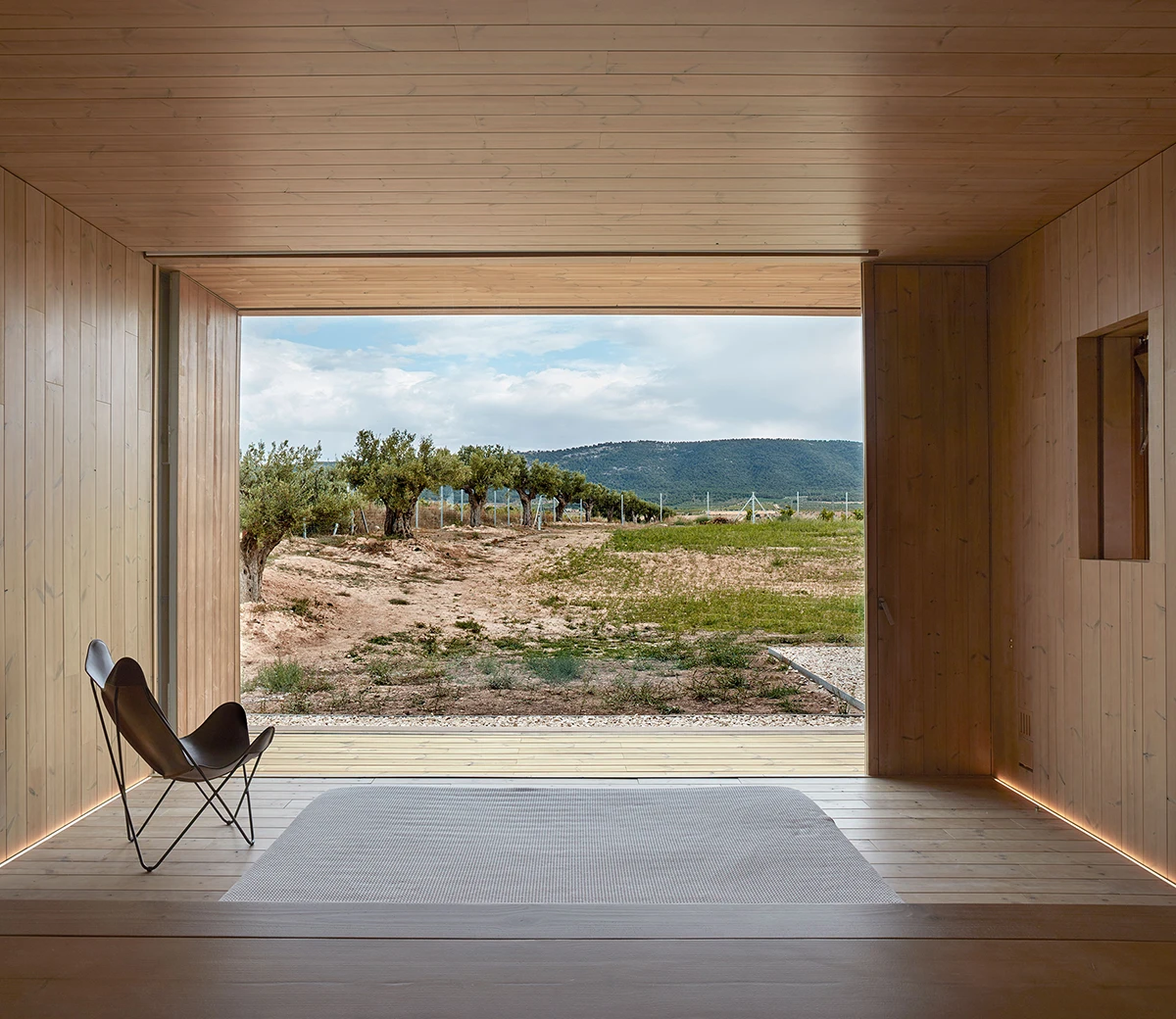
The result is a composition of two primary, weighty elements articulated by contrast: the solidity of white concrete—inside and out—and the warmth of pine surfaces that cut through it, frame views, and define thresholds.
"The house is conceived as two monolithic volumes: a white-concrete body intersected by structural planes and boxes of thermally modified pine wood." — Ramón Esteve.
Enviroment and Landscape
Arrival follows a path lined with olive trees. In the distance, the house is partially screened by cypresses, poplars, and pines, maintaining a quiet presence within the grove. Entry occurs through one of the timber volumes, leading into a central concrete space that functions as a fluid, shared living area. A large fireplace anchors this core, around which the rooms open and connect.
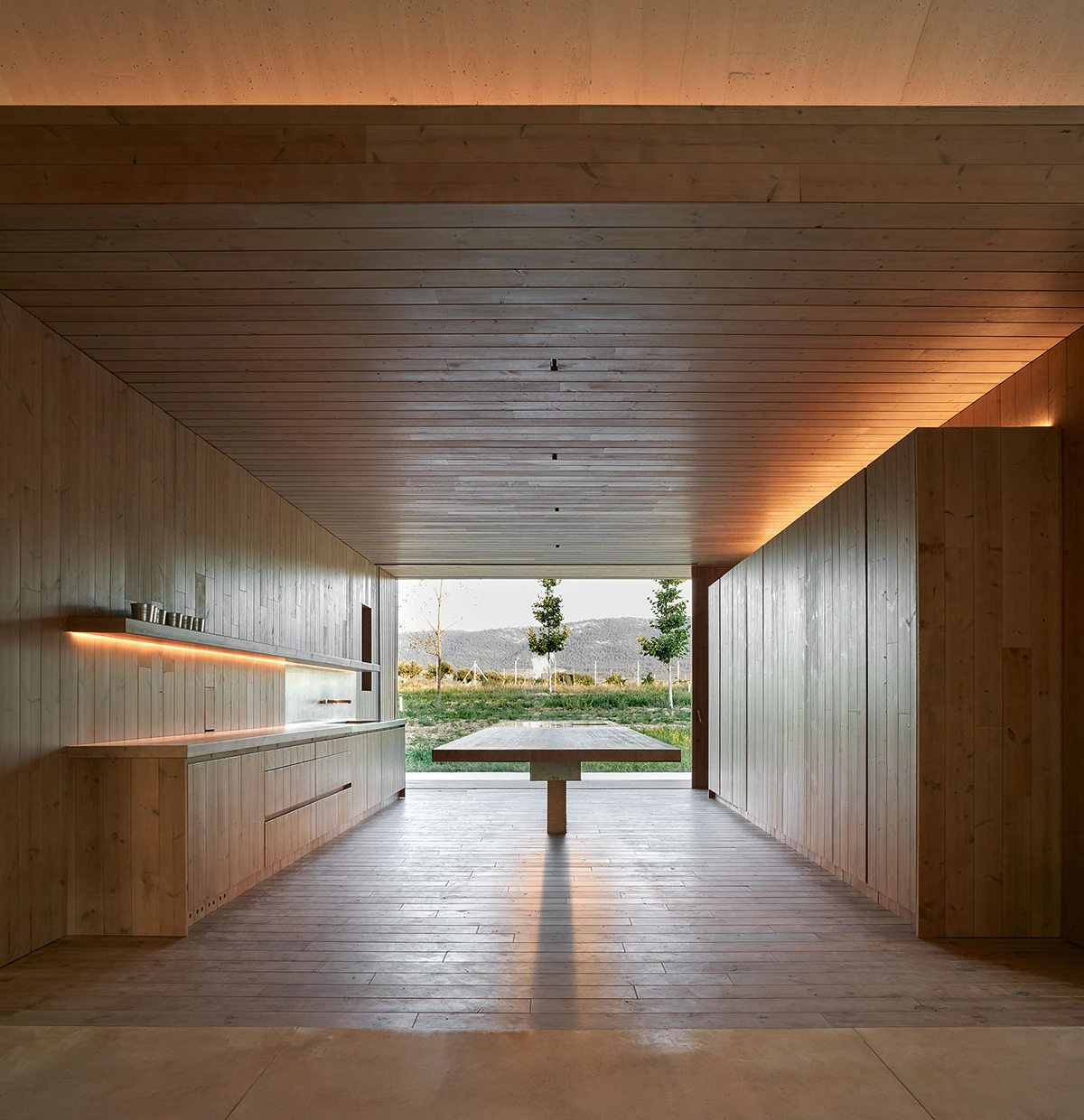
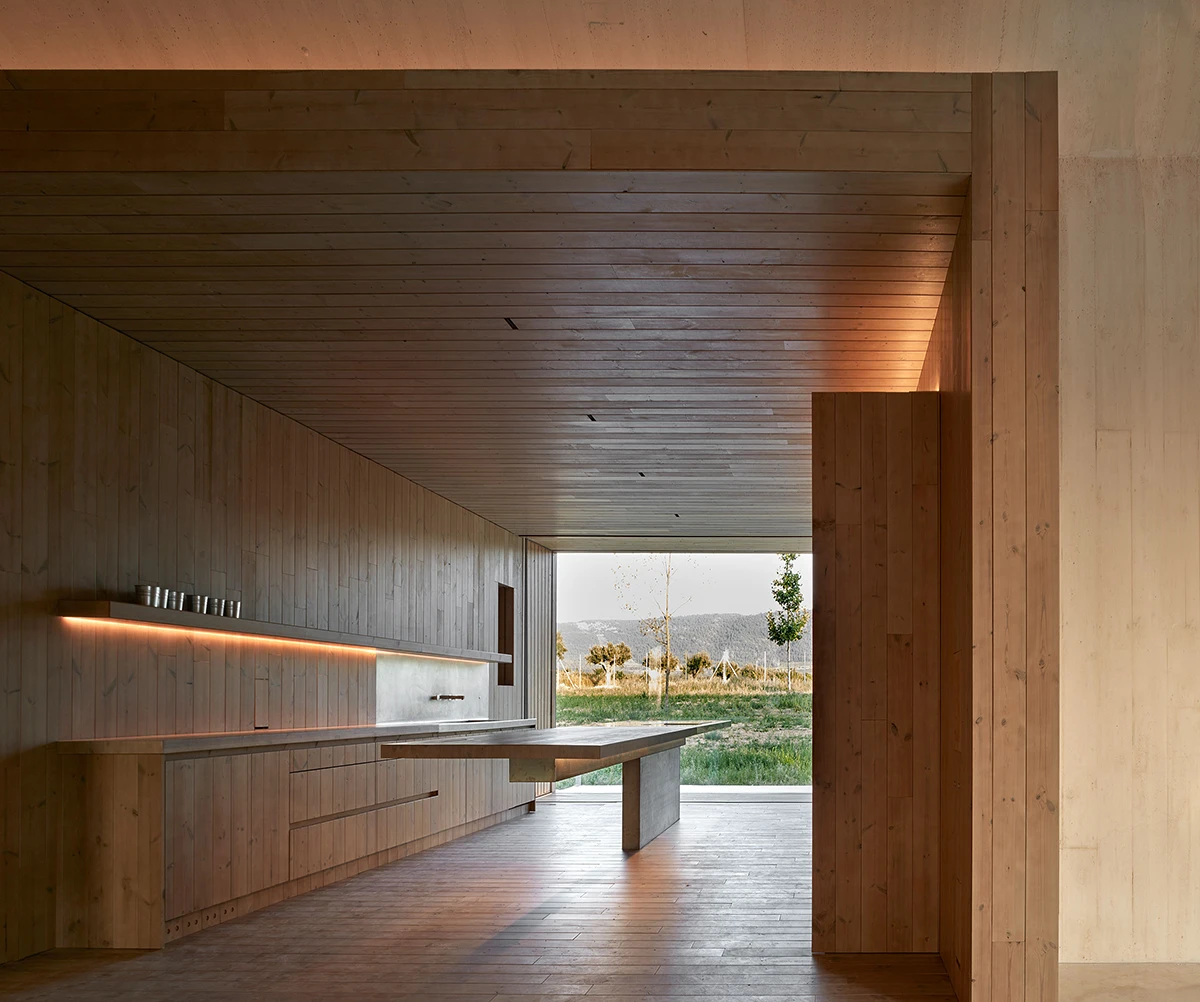
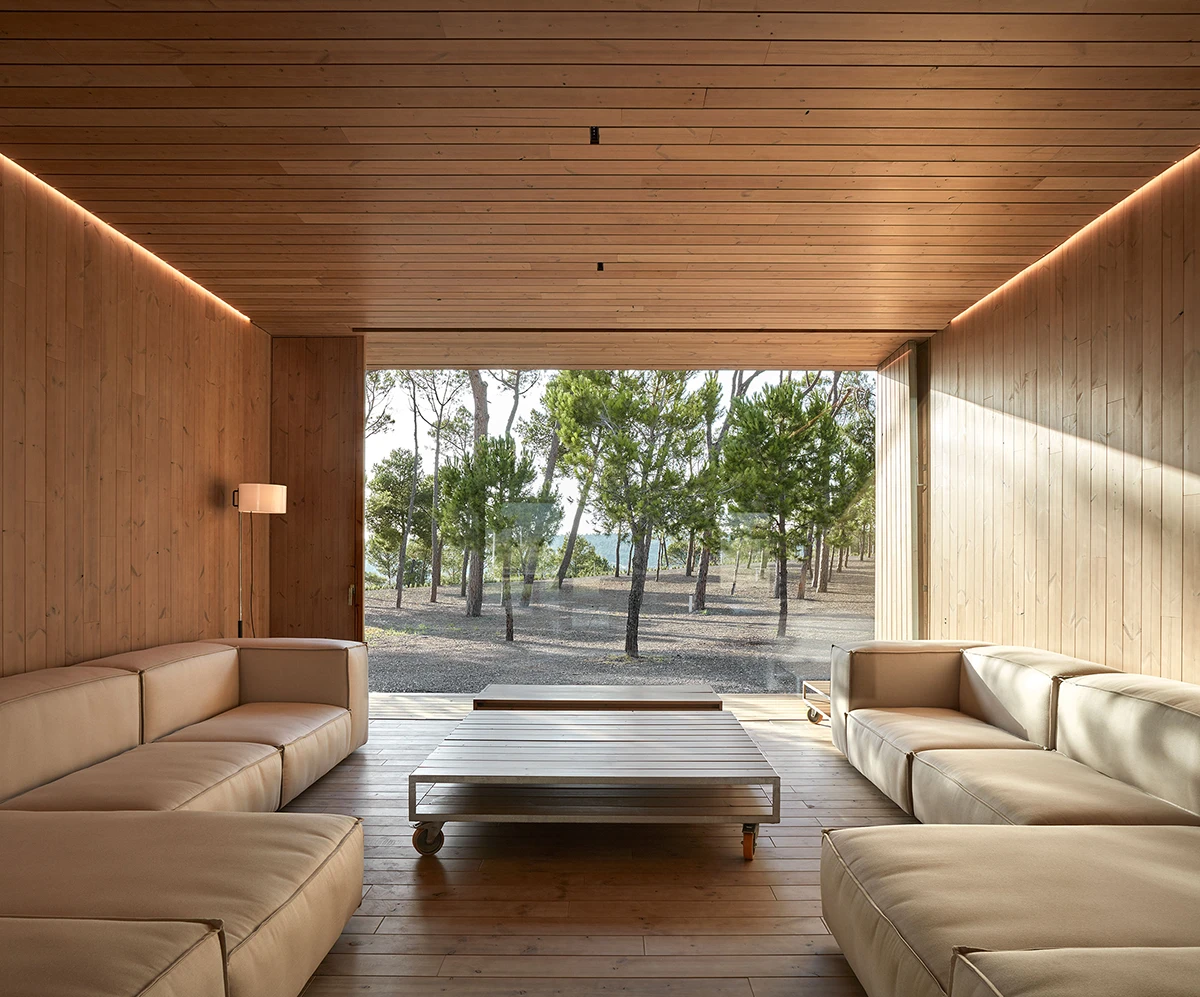
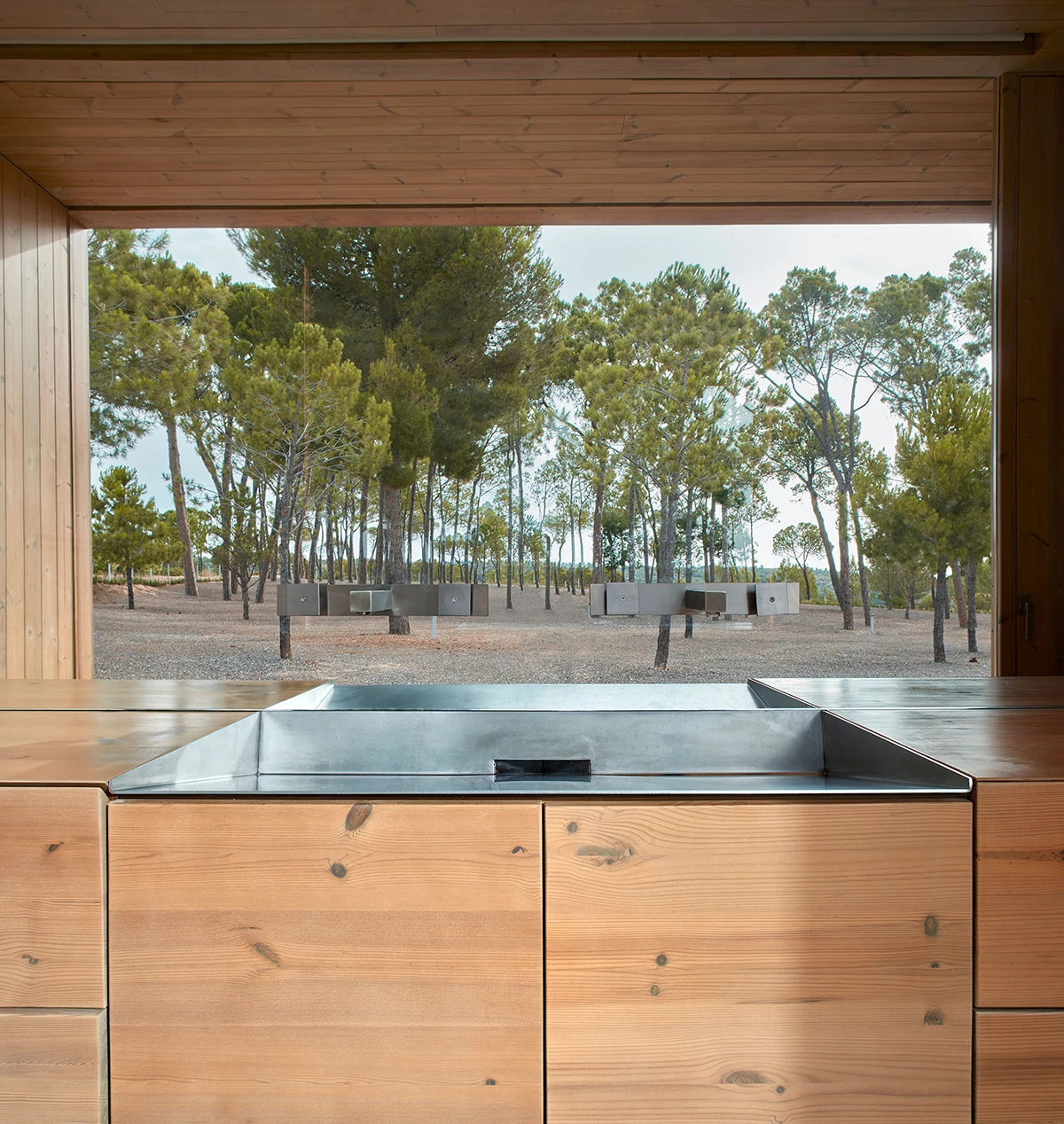
From within, the timber insertions act as both structure and filter: they carve sightlines, temper light, and frame the surrounding pine canopy and vineyard rows. As the home is intended as a second residence, the timber volumes and porch zones can be fully secured, allowing the house to close down when unoccupied.
Spaces
At the far end of the plan, a generous porch completes the sequence of interior-to-exterior spaces. It operates as an outdoor living room with a dual orientation: immediate, shaded views into the pine forest on one side, and long views across the vineyards on the other.
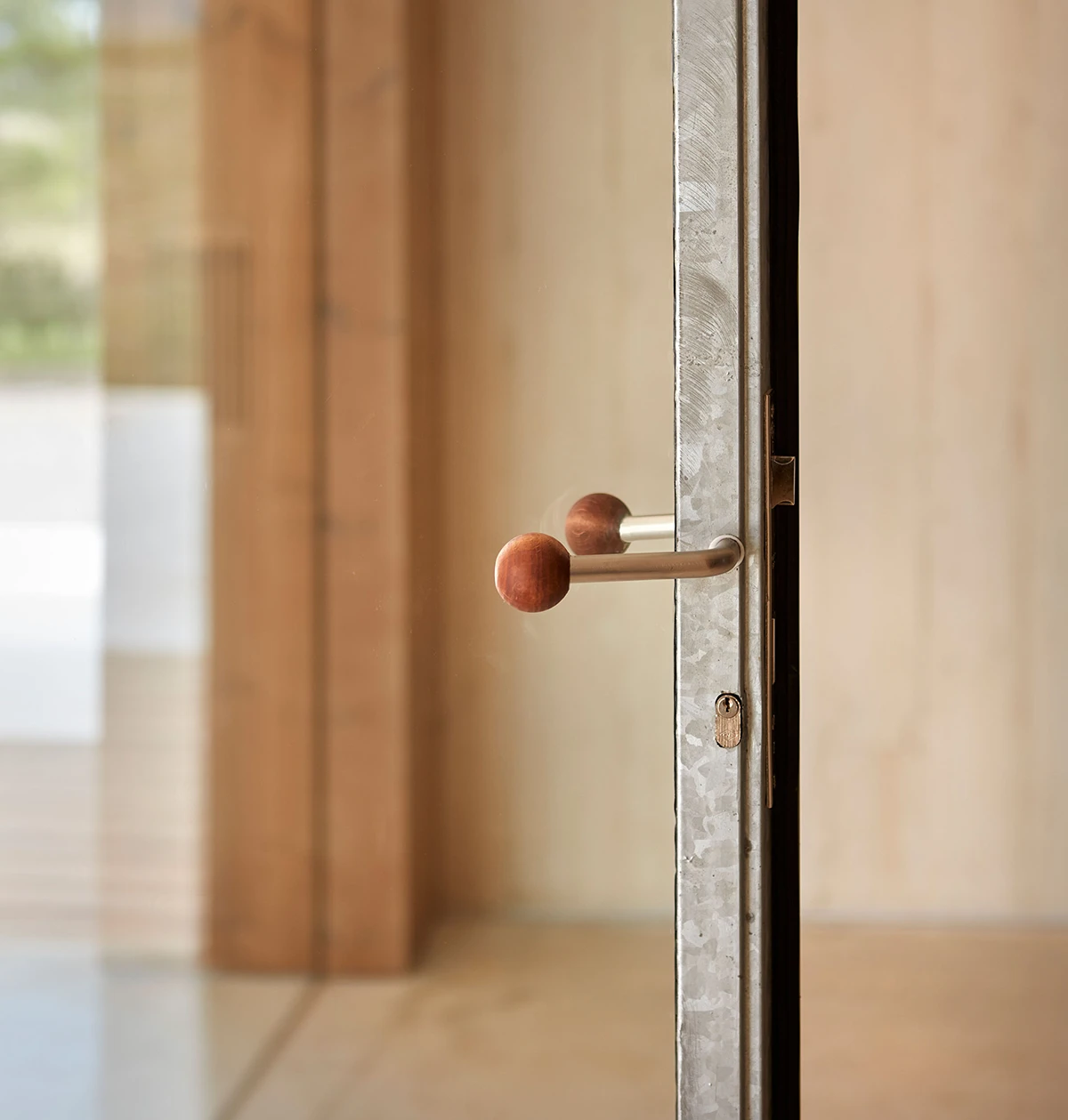
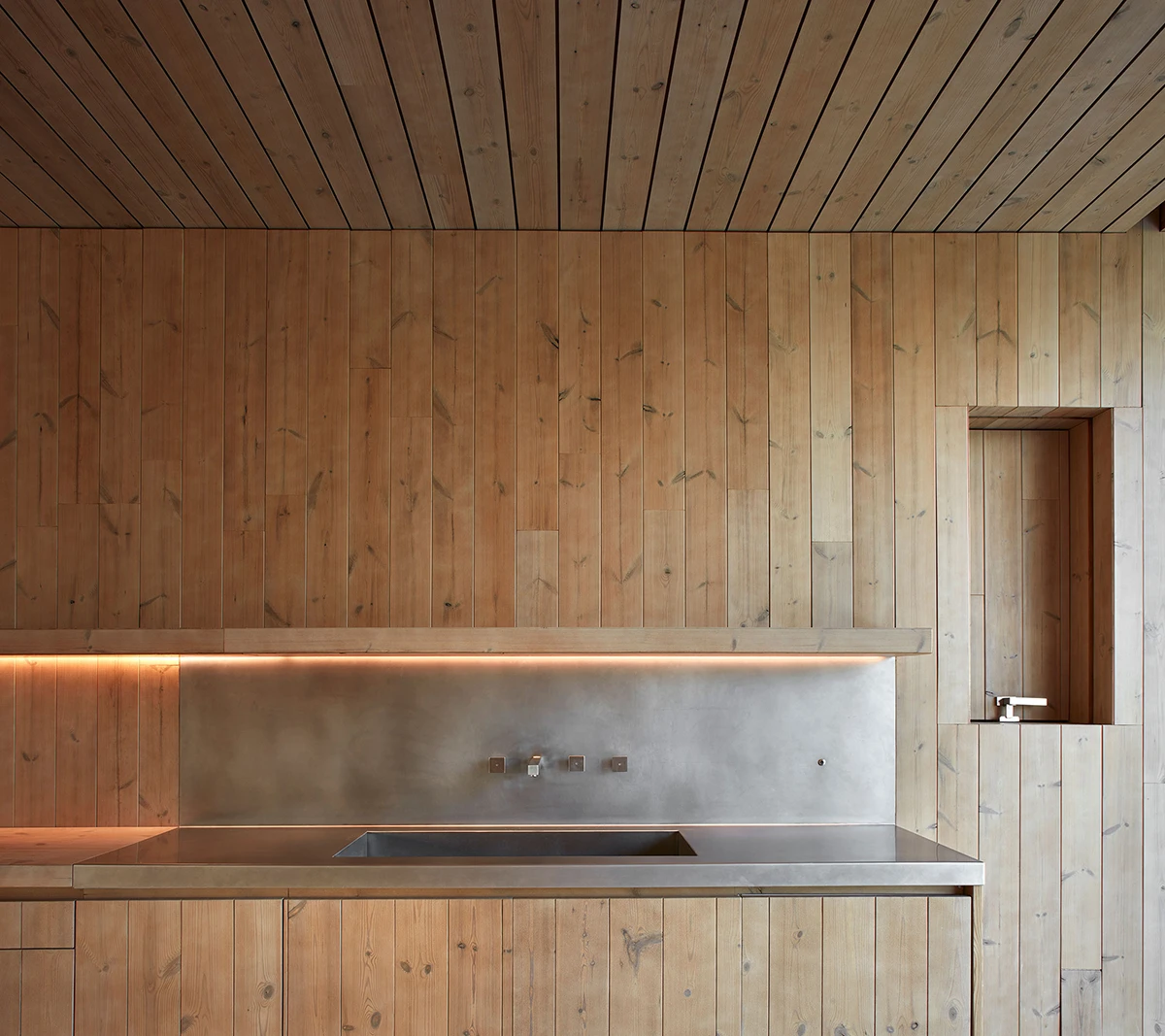
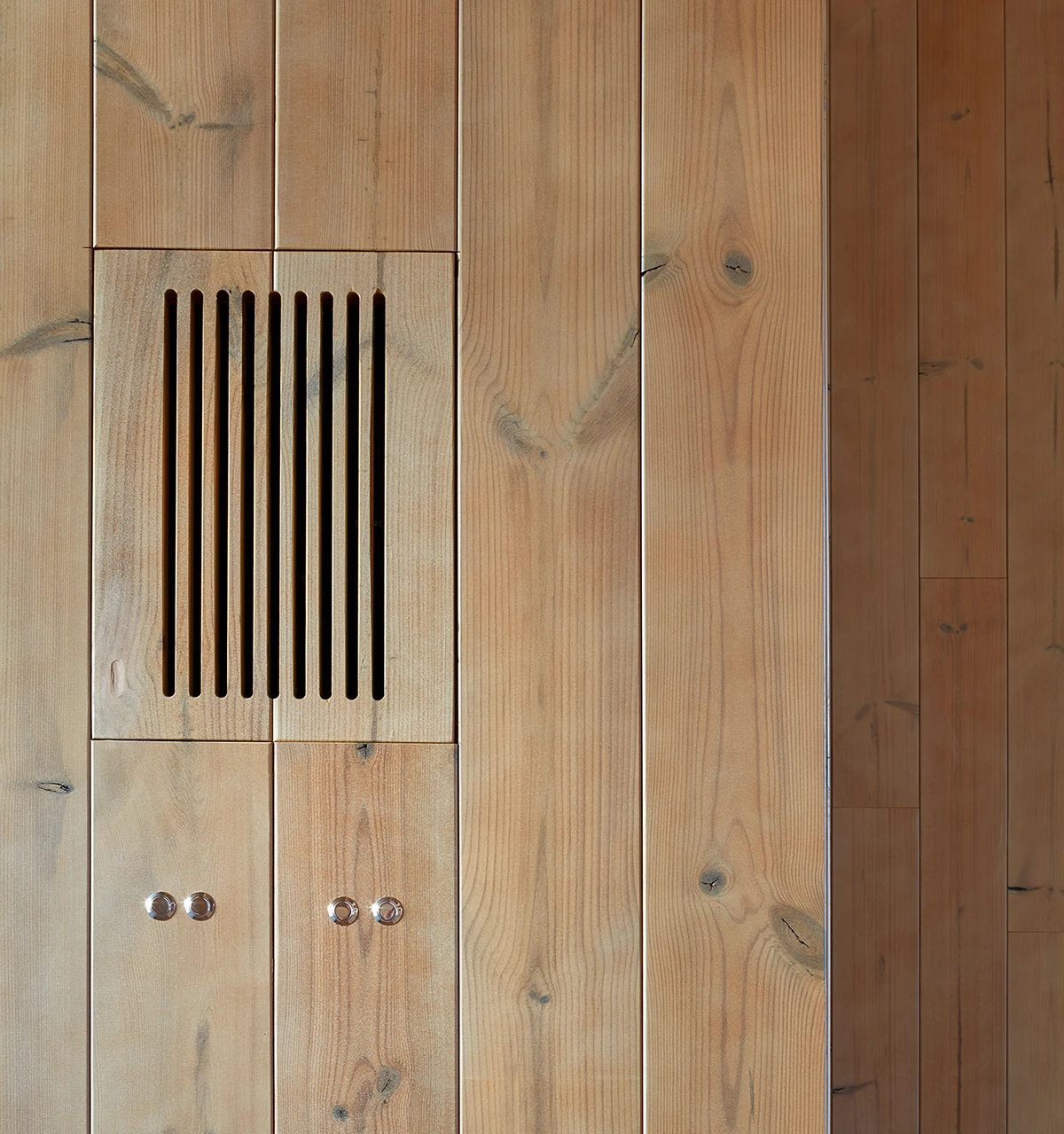
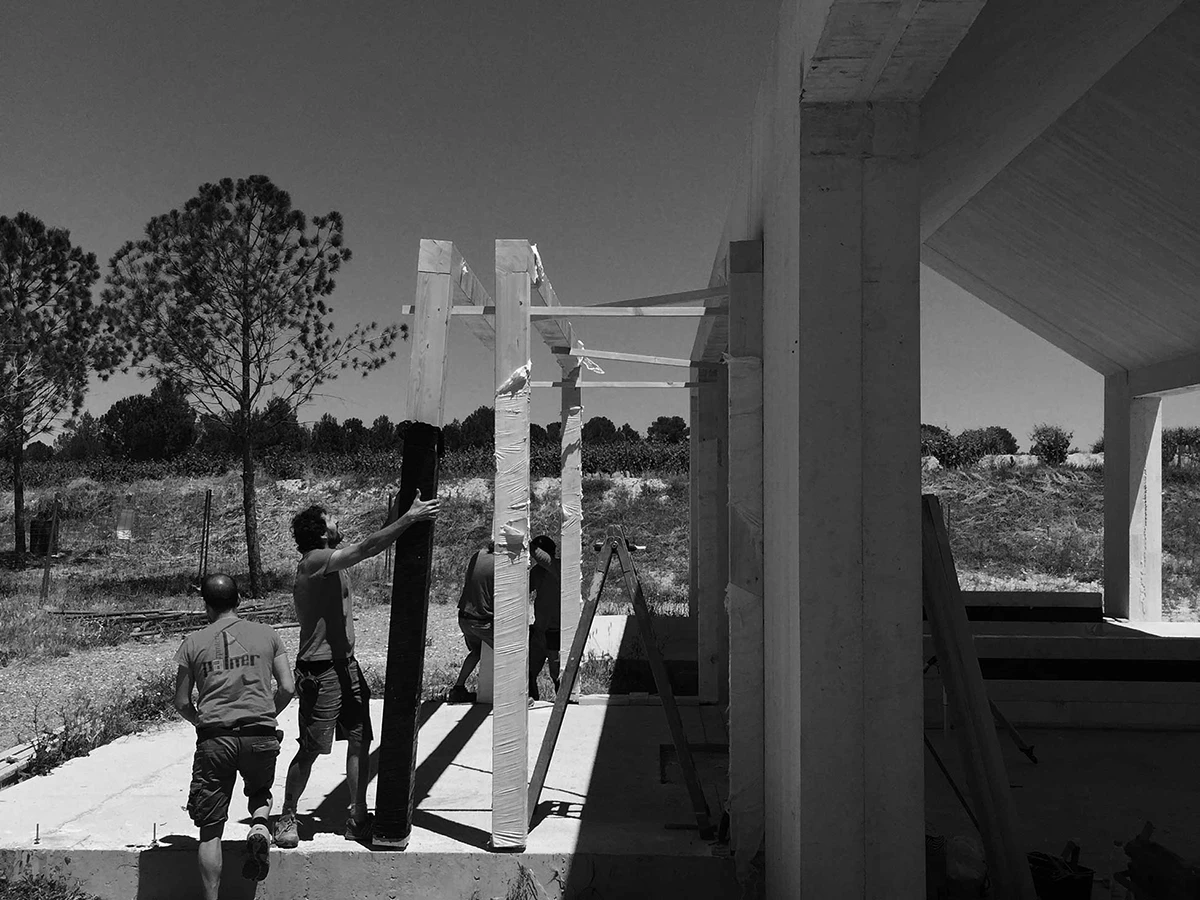
A consistent 20 cm timber module underpins the construction logic. The same plank dimension shapes the timber boxes and is echoed in the formwork used for casting the concrete, producing a unified texture and proportion throughout. Furniture, built-ins, and carpentry were designed specifically for the house using this same modulation, reinforcing the coherence of the material system—white concrete for mass and permanence, timber for warmth and inhabitable scale.

Green Technology
The environmental approach follows passive-house principles, combining high-performance envelope design with renewable-energy strategies.
"Environmentally, it follows the guidelines for a passive house. Renewable energy can be harnessed through solar panels, biomass supply, and the collection and storage of potable rainwater." — Ramón Esteve.
Energy demand is reduced through the thermal performance of the materials and a robust layer of rock-wool insulation. Lighting consumption is minimized via an efficient installation supported by a control system that optimizes the use of natural daylight.
Architect
Ramón Esteve
Collaborating Architects
Anna Boscà
Victor Ruiz
Estefanía Pérez
María Marti
Visuals
Tudi Soriano
Patricia Campos
Technical Architect
Emilio Pérez
Constructor
Construcciones Francés
Project Manager
Gonzalo Llin
Photography
Mariela Apollonio
Alfonso Calza
Filmmaking
Alfonso Calza
Music
PostData Sound Studio